CHARACTERISTICS
Selected field records from shipyards, heavy equipment plants, oil & gas pipeline projects and aerospace suppliers.
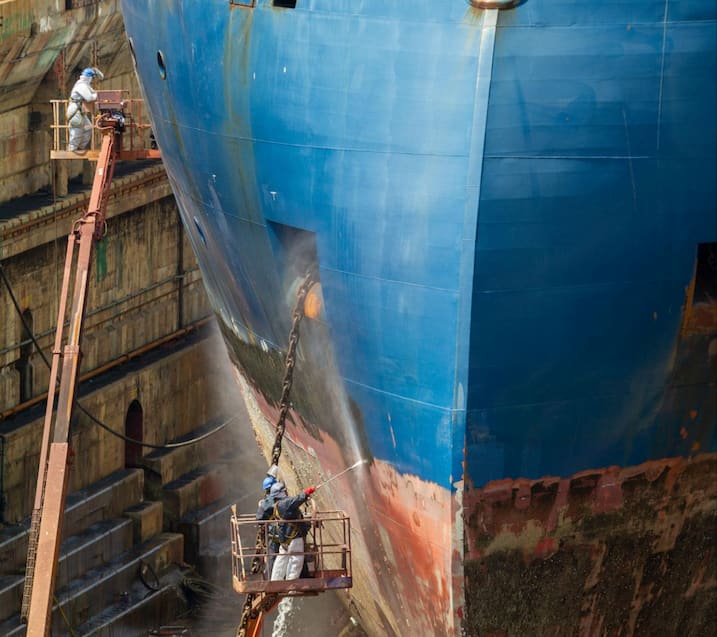
A mid-sized shipyard in Batam Island, home to Indonesia's primary maritime hub, runs two blasting bays for aluminium patrol boats and steel supply vessels. The yard switched to SEPPE garnet after inconsistent roughness from spent slag caused coating rework.
On AH32 steel plate, blast pressure was kept at 6.8–7.2 bar. Profile depth stayed at 65–78 μm across large flat areas. Cleanliness reached Sa2.5, with spot Sa3 on pitted zones. The coating inspector accepted the surface for the specified epoxy primer without rework.
Monthly abrasive consumption dropped about 22% compared with the previous slag, but the main benefit was profile repeatability. Dust on site was visibly lower, and spent garnet passed local environmental screening.
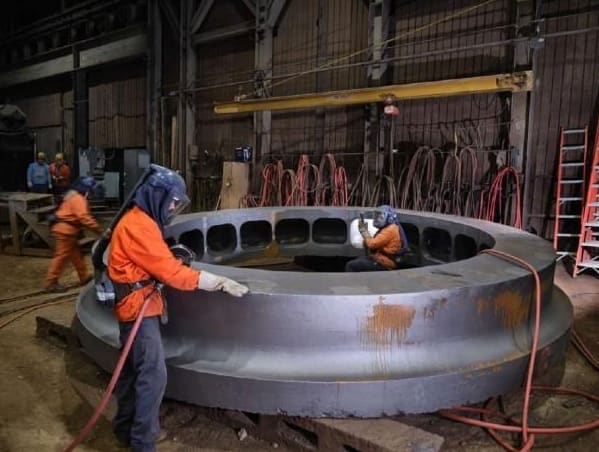
A plant in southern Germany builds excavator booms, counterweights and welded frames. Before powder coating, parts arrive with mill scale and weld spatter. The line must remove everything in one pass to keep takt time.
In a trial, SEPPE garnet was compared with brown corundum on the same components. Profile range was similar at 55–75 μm. Garnet produced less dust and fewer re-blasts were needed on shadowed weld zones. Cycle time per batch was slightly shorter.
The process engineer kept garnet for long-term use. Adhesion tests after priming showed no pull-off failures below 5 MPa, and the surface profile stayed repeatable across an entire shift.
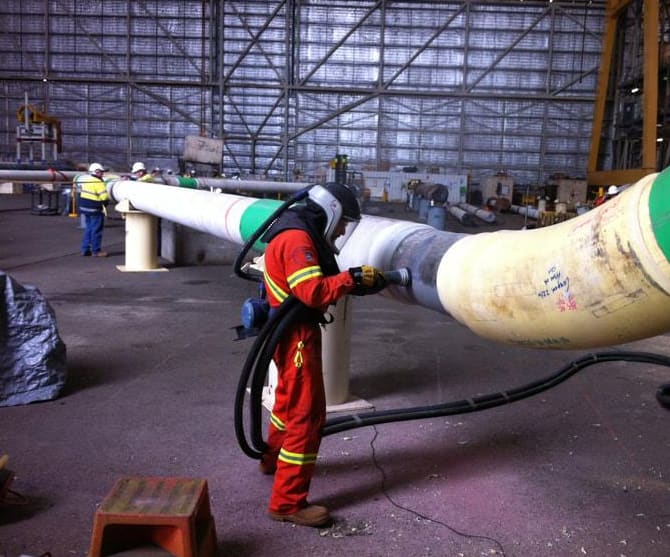
For a Sinopec pipeline construction project in Saudi Arabia, field joints on 36-inch carbon steel pipe were blasted before field-applied fusion-bonded epoxy coating. The pipe surface was X65 grade, with mill scale and light corrosion after storage.
SEPPE garnet 30/60 was used in a closed-cycle blast pot. Air pressure at the nozzle was set at 6.5–7.0 bar. After blasting, surface roughness was measured at 50–70 μm on 12 random points per joint. Cleanliness met ISO 8501-1 Sa2.5, with no visible rust or mill scale.
The coating crew reported that the blasted surface held the specified profile without deep cuts into the steel. A pull-off test on the FBE coating later showed adhesion above the contract requirement. The project used garnet for over 600 field joints.
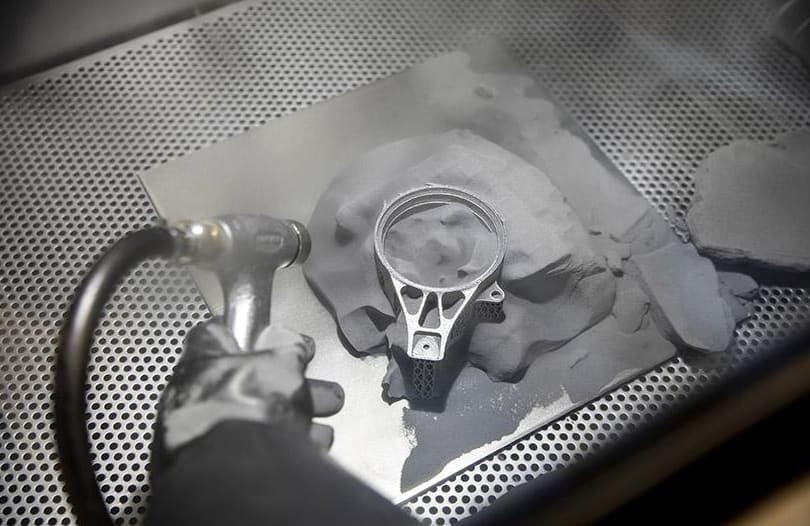
A precision parts supplier in Montreal, Canada, abrasive-blasts titanium alloy landing gear components and high-strength steel fittings before special coating.
The process specification required a clean, uniform surface and a controlled roughness range before coating. SEPPE garnet produced an even, fine finish under the specified blasting parameters.
Roughness readings stayed within the specified control range on the inspected parts. Coating adhesion met the acceptance requirement, and the lot was accepted without rework.