Quality Control + Documented Evaluation

A More Reliable Way to Evaluate Your Garnet Supplier

Review how SEPPE controls particle size, moisture, soluble contamination and finished-product consistency—then evaluate SGA garnet under your own operating conditions before a bulk purchase.

Quality Control Hub

Quality Is a Chain of Controls, Not a Single Certificate

A reliable raw material source provides the foundation, but source alone cannot guarantee a consistent finished abrasive. Finished quality also depends on separation, washing, drying, screening, sampling, documentation and protection during shipment.

Waterjet Cutting

SGA 80 Waterjet Quality Priorities

For waterjet garnet, quality control focuses on grading, excessive fines, oversized particles and moisture. These controls support stable abrasive feeding; final cutting performance still depends on the machine, orifice, focusing tube, material and operating settings.

  • Particle-size distribution and oversize control
  • Excessive fines and material cleanliness
  • Moisture and free-flowing condition
  • Equipment compatibility reviewed before a trial
View SGA 80 Product →
Abrasive Blasting

SGA 20/40 and 30/60 Blasting Priorities

For blasting garnet, grading must be reviewed together with moisture, soluble contamination and the required surface result. Surface cleanliness and profile should be confirmed on the actual substrate under the project’s operating conditions.

  • Particle distribution and excessive fines
  • Moisture and abrasive flow
  • Conductivity or chloride where specified
  • Cleaning rate, consumption and achieved profile
What We Control

One Control System, Different Application Priorities

The relevant test items and acceptance limits depend on the grade, application, purchase specification and order requirements. A typical product value should not be read as an order-specific batch result.

Control ItemWhy It MattersWaterjetBlastingEvidence
Particle-size distributionShows how material is distributed across the specified sieve range.PrimaryPrimaryTDS / sieve analysis
Oversized particlesMay disturb feeding or be unsuitable for restricted passages.PrimaryRelevantUpper-sieve result
Excessive finesCan affect useful cutting action, dust, housekeeping and flow.PrimaryPrimaryLower-sieve / pan result
MoistureExcess moisture can contribute to caking and unstable flow.PrimaryPrimaryProduct / batch record
Bulk densitySupports feed-rate, packing and consumption comparisons.RelevantRelevantTDS / test report
Conductivity / chlorideUsed where soluble contamination is limited by the purchase or project specification.When requiredImportant for coated steelMethod-specific report
Mineral composition / free silicaFree crystalline silica must not be confused with total SiO₂ in chemical composition.RelevantRelevantTDS / laboratory report
Packing and loadingProtects inspected material against moisture, damage and identification errors.PrimaryPrimaryPacking / loading record
Published Grading Data

Review Particle-Size Distribution by SGA Grade

Open a grade below to review the data currently published in the corresponding SEPPE technical data sheet. These are typical product data; request order-specific documentation when evaluating a purchase.

SGA 80 Waterjet Garnet — Published Sieve Data

84% of the published retained mass is distributed across mesh 60, 70 and 90. Cumulative retained reaches 94% at mesh 90 and 98% at mesh 100.

Particle Size Distribution
#40 / 425 µm
0%
#45 / 355 µm
0%
#50 / 300 µm
10%
#60 / 250 µm
30%
#70 / 212 µm
28%
#90 / 170 µm
26%
#100 / 150 µm
4%
Pan / <150 µm
2%
Particle Size Distribution Curve
Particle-size distribution by mesh Discrete retained values are zero percent at mesh 40 and 45, ten percent at 50, thirty percent at 60, twenty-eight percent at 70, twenty-six percent at 90, four percent at 100 and two percent in the pan. 010203040 #40#45#50#60#70#90#100Pan ASTM sieveDiscrete retained (%) 0%0%10%30%28%26%4%2%

Exact Sieve Analysis

MeshNominal SizeDiscrete RetainedCumulative Retained
#40425 µm0%0%
#45355 µm0%0%
#50300 µm10%10%
#60250 µm30%40%
#70212 µm28%68%
#90170 µm26%94%
#100150 µm4%98%
Pan<150 µm2%100%
Download SGA 80 TDS
SGA 30/60 Blasting Garnet — Published Sieve Data

The principal retained fractions are 28% at 0.380 mm and 68% at 0.270 mm. Cumulative retained reaches 96% at 0.270 mm.

Particle Size Distribution
#20 / 0.850 mm
0.00%
#30 / 0.550 mm
0.00%
#40 / 0.380 mm
28.00%
#50 / 0.270 mm
68.00%
#60 / 0.250 mm
3.80%
#70 / 0.212 mm
0.20%
Particle Size Distribution Curve
Particle-size distribution by ASTM sieve Discrete retained values are zero percent at sieve 20 and 30, 28 percent at 40, 68 percent at 50, 3.8 percent at 60 and 0.2 percent at 70. 020406080 #20#30#40#50#60#70 ASTM sieveDiscrete retained (%) 0%0%28.0%68.0%3.8%0.2%

Exact Sieve Analysis

Sieve OpeningDiscrete RetainedCumulative Retained
0.850 mm0.00%0.00%
0.550 mm0.00%0.00%
0.380 mm28.00%28.00%
0.270 mm68.00%96.00%
0.250 mm3.80%99.80%
0.212 mm0.20%100.00%
Download SGA 30/60 TDS
SGA 20/40 Blasting Garnet — Published Sieve Data

The largest individual fractions are 33.8% at ASTM #30 and 24.0% at #35. Cumulative retained reaches 82.8% at #35 and 98.1% at #40.

Particle Size Distribution
#20 / 0.850 mm
4.70%
#25 / 0.710 mm
20.30%
#30 / 0.600 mm
33.80%
#35 / 0.500 mm
24.00%
#40 / 0.425 mm
15.30%
Below #40
1.90%
Particle Size Distribution Curve
Particle-size distribution by ASTM sieve Discrete retained values are 4.7 percent at sieve 20, 20.3 percent at 25, 33.8 percent at 30, 24 percent at 35, 15.3 percent at 40 and 1.9 percent below sieve 40. 010203040 #20#25#30#35#40Below ASTM sieveDiscrete retained (%) 4.7%20.3%33.8%24.0%15.3%1.9%

Exact Sieve Analysis

Sieve OpeningASTM SievePublished RangeDiscrete RetainedCumulative Retained
0.850 mm#200–10%4.70%4.70%
0.710 mm#25>85% combined20.30%25.00%
0.600 mm#3033.80%58.80%
0.500 mm#3524.00%82.80%
0.425 mm#4015.30%98.10%
<0.425 mmBelow #400–5%1.90%100.00%
Download SGA 20/40 TDS

How to use these values: confirm that both suppliers use comparable sieve openings, units and reporting formats. Typical TDS data should not be presented as a guarantee for a specific shipment.

Production and Quality Control

From Raw Material Review to Finished-Product Inspection

Finished-product consistency depends on control across the processing sequence. Each stage has a different purpose: reducing unwanted material, controlling moisture, defining the grading and checking the finished product before packing.

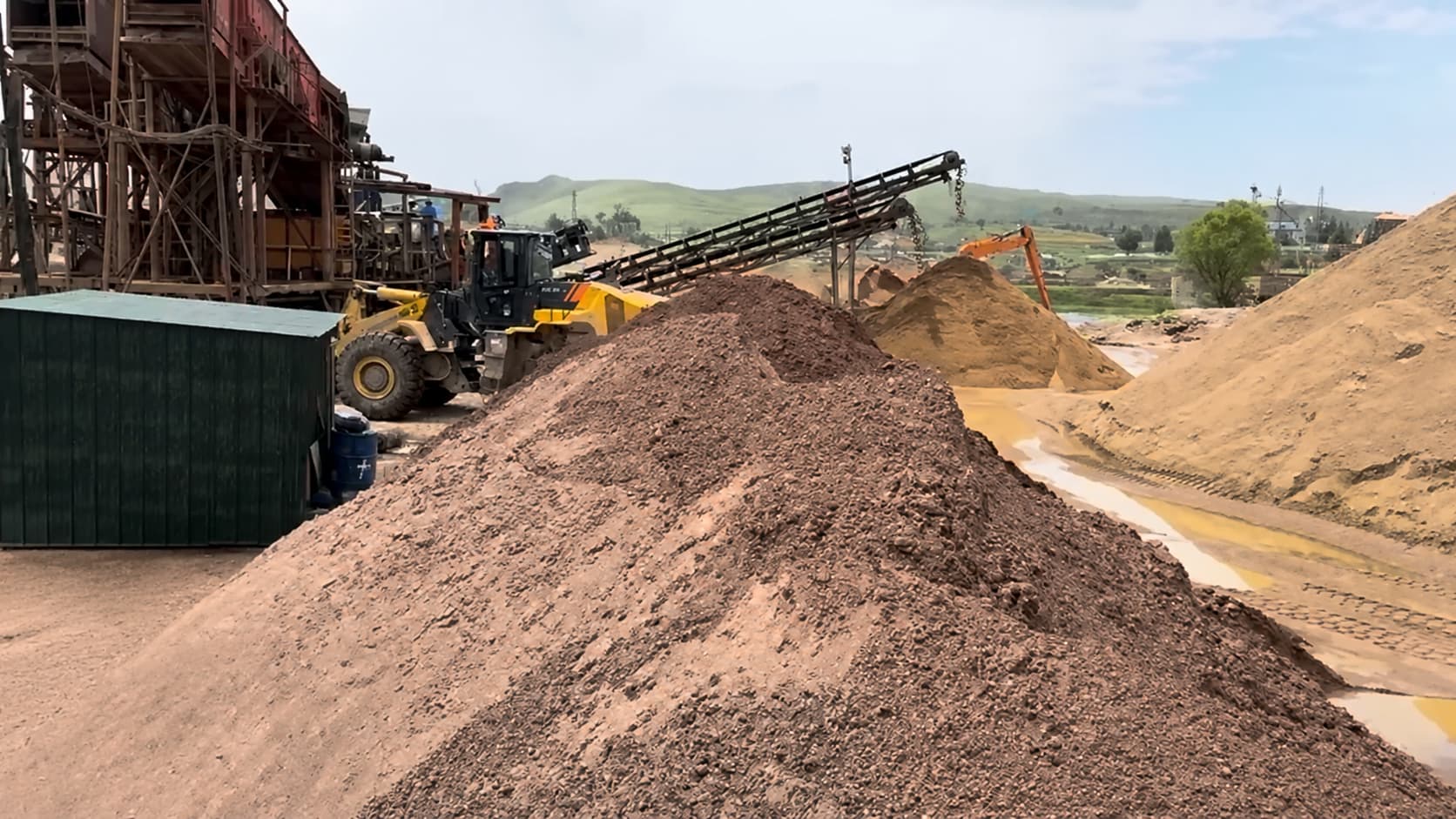
Raw alluvial garnet awaiting review
01

Raw Material Review

Particle condition, mineral composition and visible unwanted material are reviewed before raw garnet enters the main processing sequence.

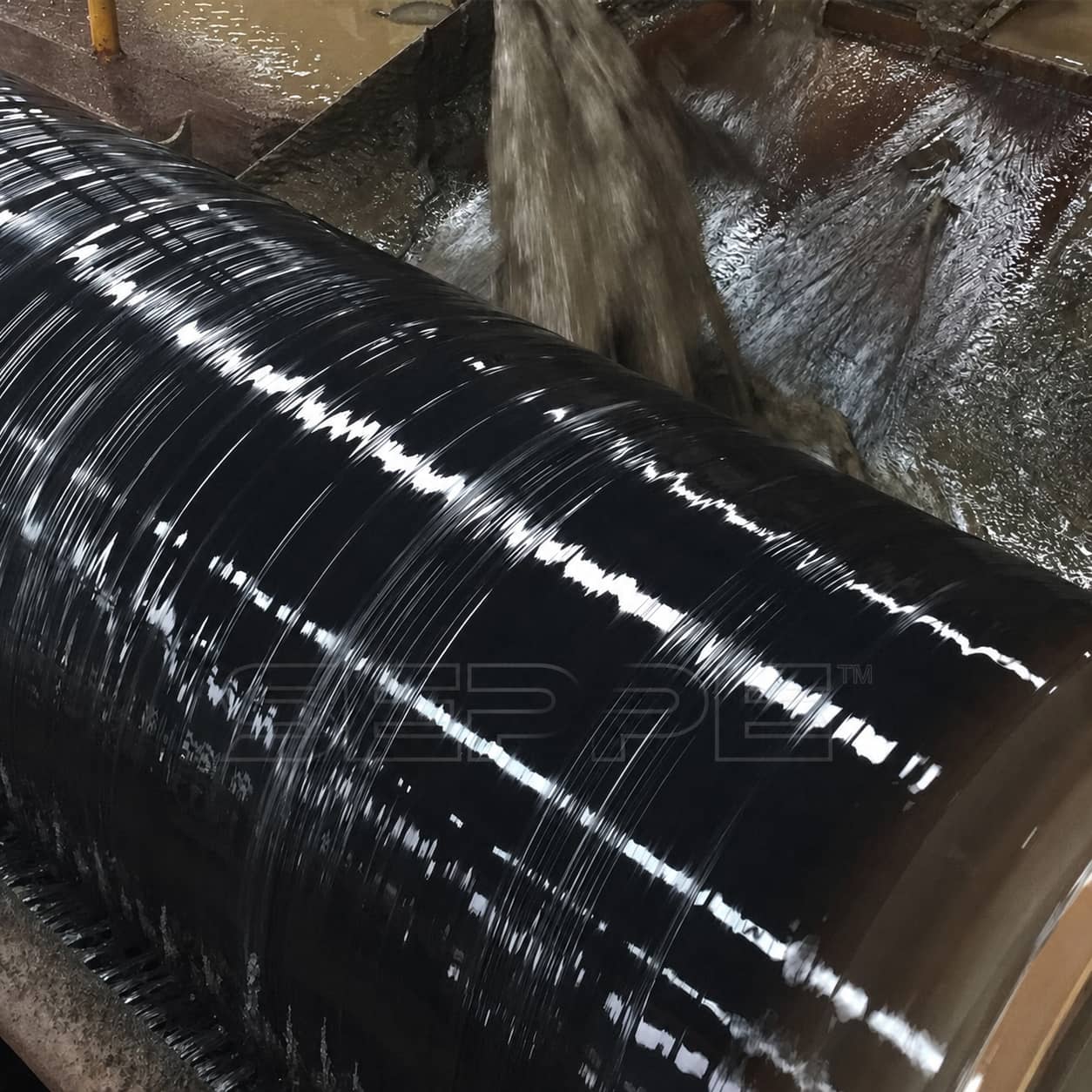
Magnetic separation equipment processing garnet
02

Magnetic Separation

Magnetic separation uses differences in mineral response to help reduce selected unwanted minerals before further processing.

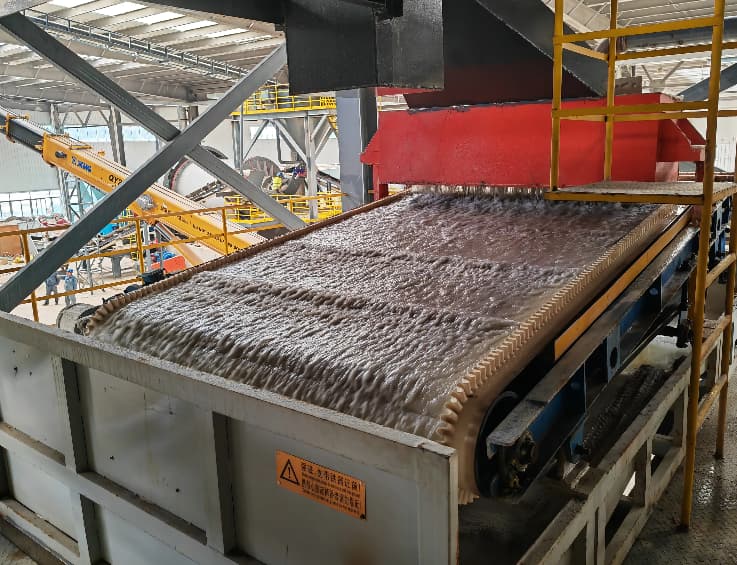
Washing equipment removing loose material from garnet
03

Washing

Washing removes clay, loose fines and surface material before drying and grading. Cleaner material supports more stable downstream processing.

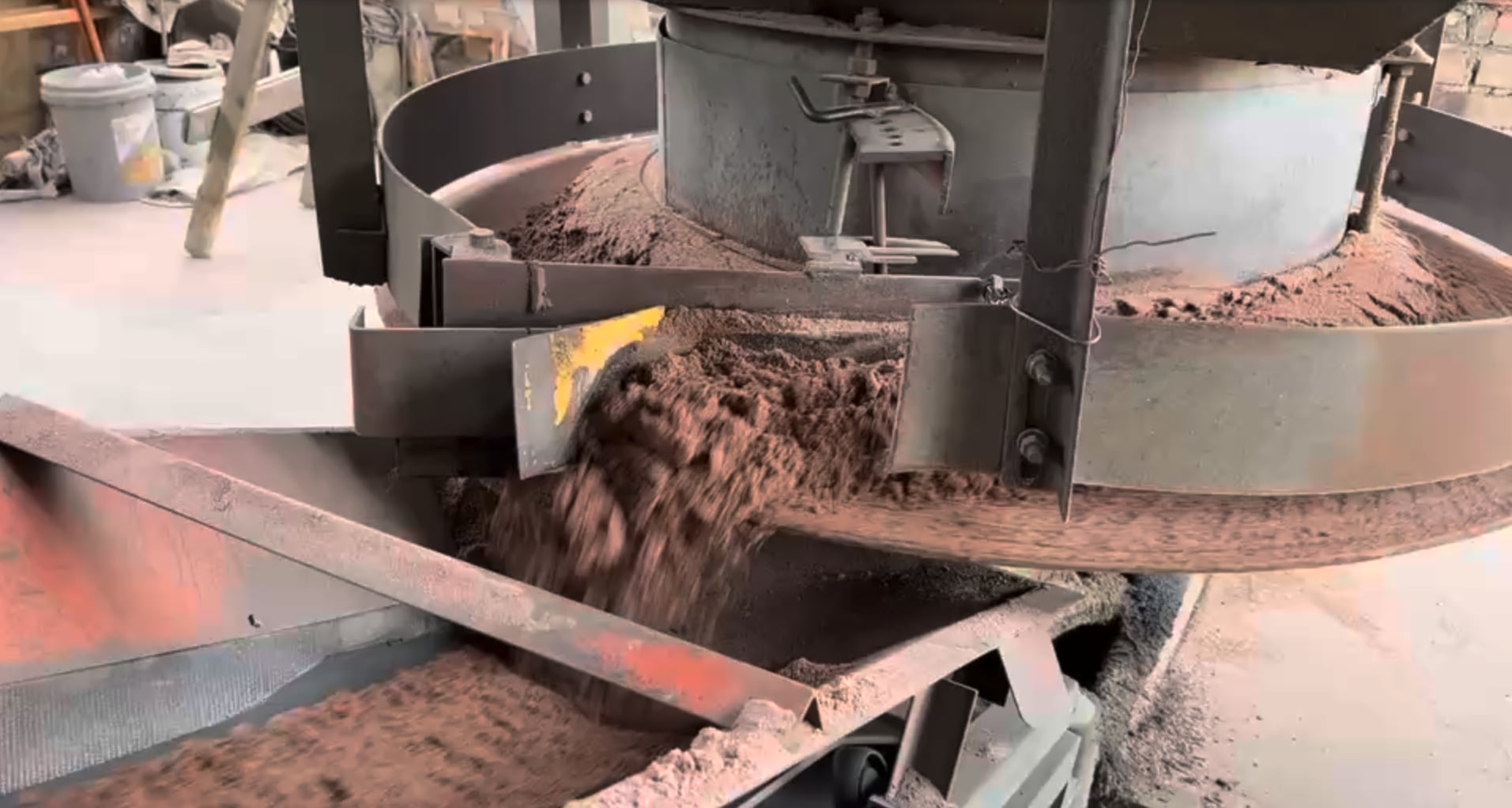
Garnet passing through drying equipment
04

Controlled Drying

Moisture is reduced before screening to support grading accuracy, free-flowing material and more reliable packing and storage.

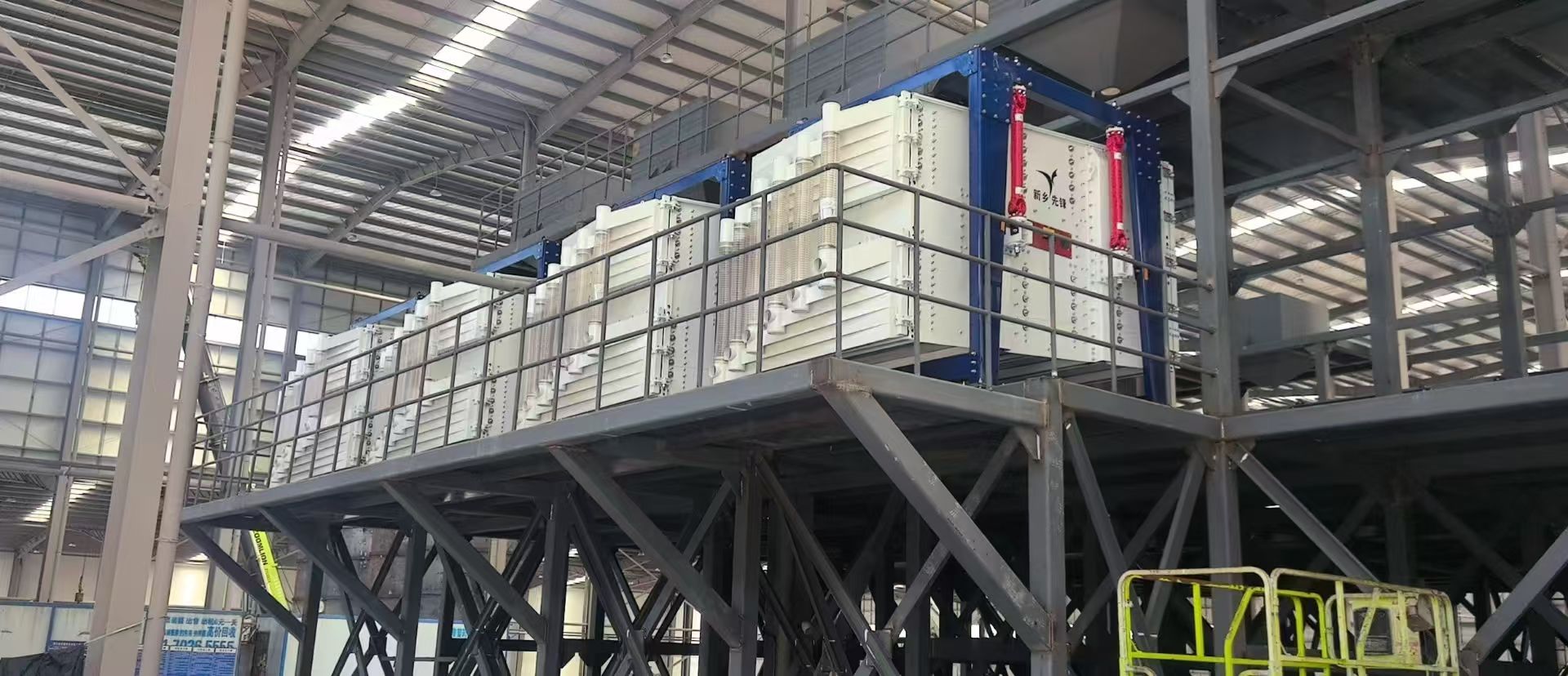
Vibrating screen classifying garnet by particle size
05

Screening and Size Control

Screens classify dried garnet into the intended grade while controlling oversized grains and excessive fines.

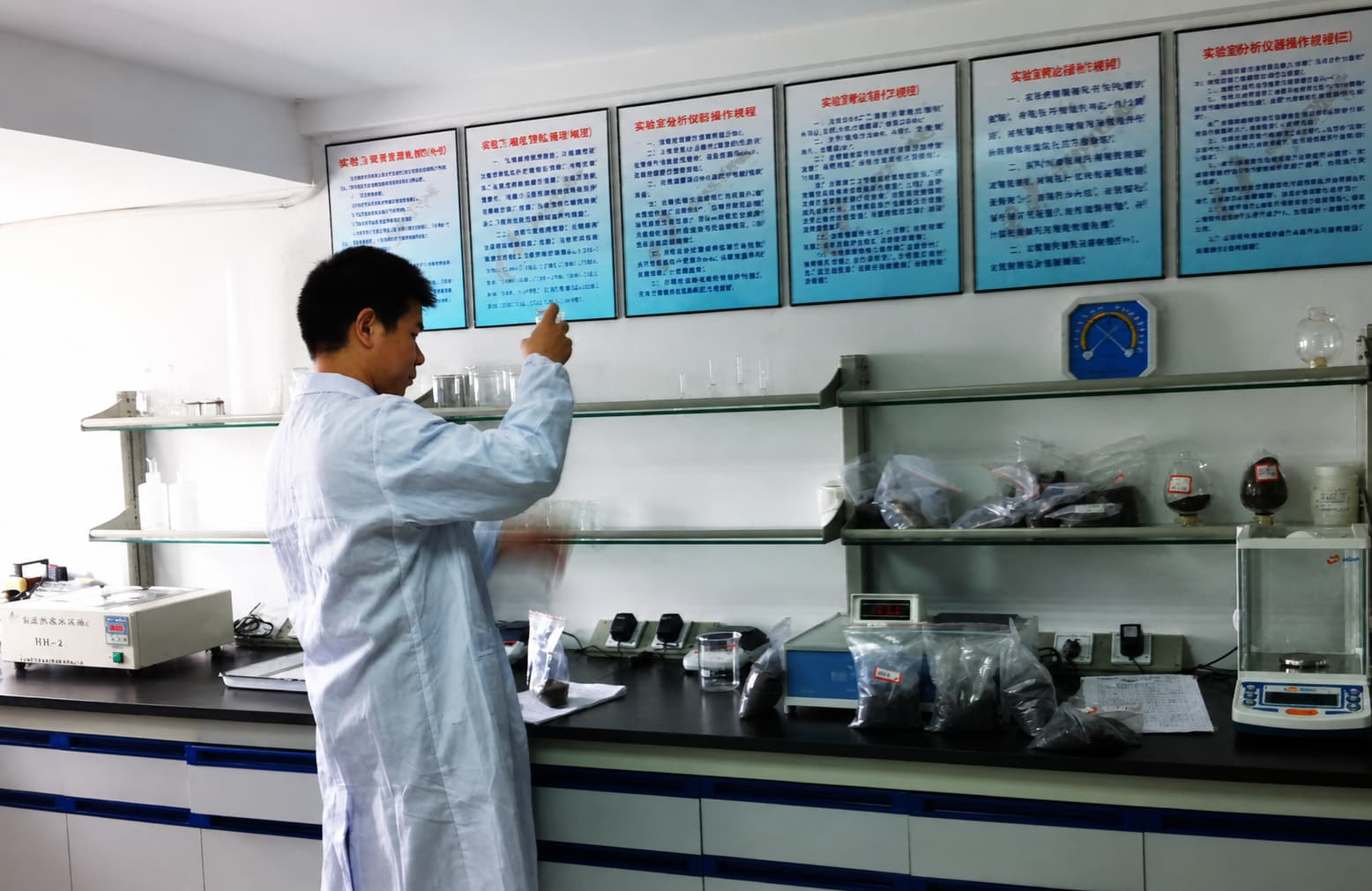
Technician inspecting a finished garnet sample
06

Finished-Product Inspection

Representative finished-product samples are checked against the applicable product and order requirements before release for packing.

What happens if a result is outside the applicable requirement?

The material should be held for review rather than released on the strength of a general TDS. Only describe isolation, reprocessing, retesting or retained-sample procedures here if those steps are part of SEPPE’s documented operating practice.

Technical Documents

Review the Specification Before Requesting a Batch Record

Use the TDS to review published product data. For an order evaluation, request available batch or shipment documentation and confirm which values are typical, guaranteed or batch-specific.

TDS

SGA 80 Waterjet Garnet

Published particle-size distribution and typical physical information for the general waterjet grade.

Download Current TDS 
TDS

SGA 30/60 Blasting Garnet

Published grading and typical data for general industrial blasting and surface preparation.

Download Current TDS 
TDS

SGA 20/40 Blasting Garnet

Published grading and typical data for coarser blasting and heavier coating-removal requirements.

Download Current TDS 

Technical Standards and References

A test standard explains how a property is measured. The applicable product, project or purchase specification determines the acceptance requirement.

Controlled Product Evaluation

Evaluate SEPPE Garnet on Your Own Equipment

A documented evaluation helps you compare SEPPE garnet with your current abrasive using the same equipment, material and acceptance criteria. The purpose is to establish application fit before regular supply—not to promise a universal result from laboratory data alone.

01

Share Your Setup

Tell us the application, equipment, current abrasive, operating conditions and the result you need to verify.

02

Review the Trial Package

SEPPE reviews grade fit, available documents, suggested sample quantity and applicable shipping terms.

03

Run a Comparable Test

Use the same equipment, material and agreed acceptance criteria wherever practical, then record the agreed metrics.

04

Review the Result

Compare the recorded results, discuss any parameter adjustment and decide whether a pilot order is justified.

What SEPPE Provides for Review

The exact package depends on the grade and the information available for the proposed sample or order.

  • Suggested SGA grade and sample quantity
  • Current TDS and available SDS
  • Available sample or batch documentation
  • Particle-size information relevant to the grade
  • Comparable-test checklist and assessment sheet
  • Post-trial technical and commercial review

What the Evaluation Can Measure

Waterjet and blasting evaluations use different scorecards.

Waterjet Cutting

Abrasive flow rate, feed interruptions, cutting speed at equal quality, edge quality, kerf or taper and abrasive use per accepted part.

Abrasive Blasting

Cleaning rate, consumption per m², surface profile in µm or mil, visual cleanliness, dust or visibility and reuse where applicable.

Important measurement note: Sa 2½ and Sa 3 describe visual surface-cleanliness grades. Surface-profile depth should be reported separately in µm or mil. Focusing-tube or nozzle wear normally requires a longer pilot period and should not be concluded from a short sample test.

Ready to Request an Evaluation?

Complete the separate Request a Trial Review form directly below this section. Include your application, current abrasive, equipment setup and the result you need to verify.

Contact Us
Questions Before Evaluation

Quality Documentation and Trial FAQ

Clarify what published data can show, what requires batch documentation and what should be confirmed on the customer’s own equipment.

Is the published sieve table a batch guarantee?

No. The table presents typical data from the current product TDS. Confirm the applicable specification and request available order-specific documentation when evaluating a shipment.

Does a finer particle distribution always perform better?

No. Particle-size distribution must be matched to the equipment, material and required result. A finer or coarser distribution should not be described as universally superior without a comparable operating trial.

How much sample material is required?

The quantity depends on the application, feed rate, trial duration and shipping feasibility. A small laboratory sample may not be enough to evaluate cutting output, consumption or longer-term equipment wear.

Can one trial prove focusing-tube or nozzle life?

Usually not. Wear assessment requires a longer and properly controlled pilot period. A short sample trial is better suited to feed behavior, cutting or cleaning output and immediate quality observations.

Can SEPPE guarantee Sa 2½ or a specific surface profile?

The garnet grade influences the result, but surface condition, pressure, nozzle, technique and other operating variables also matter. The required cleanliness and profile should be confirmed on a representative test area.

What happens after a successful evaluation?

SEPPE and the customer review the recorded results, confirm product and order requirements, and determine whether a pilot order or regular bulk supply is appropriate.

Need a Document or Technical Review?

Start with the Evidence Relevant to Your Application

Send the required grade, application, quantity and destination. SEPPE can provide available technical documents or review whether a controlled evaluation is practical.

SEPPE supplies alluvial pink garnet abrasives for waterjet cutting, sandblasting and surface preparation. Contact us for mesh selection, product specifications, samples and quotations.

Contact Us

Copyright© 2022-2026 Seppe Technologies. All Rights Reserved.