
Views: 0 Author: SEPPE Tech Publish Time: 2026-11-26 Origin: SGA Blasting
Hidden Risks Posed by Moisture and Oil Contamination
When undertaking a garnet blasting project, what are the first factors you consider? Is it the abrasive’s particle size distribution, dust content, conductivity, or perhaps its free crystalline silica content? Or maybe the resulting surface profile?
Beyond the abrasive itself and the final surface finish, there is another often-overlooked factor: the quality of the compressed air.
In dry abrasive blasting, compressed air transports the garnet abrasive to the nozzle and accelerates it to a sufficient velocity to impact the workpiece surface. If the compressed air contains excessive moisture or oil, problems such as inconsistent abrasive feed, contamination of the steel surface, and compromised quality in subsequent coating applications can arise even when the garnet abrasive meets its technical specifications.
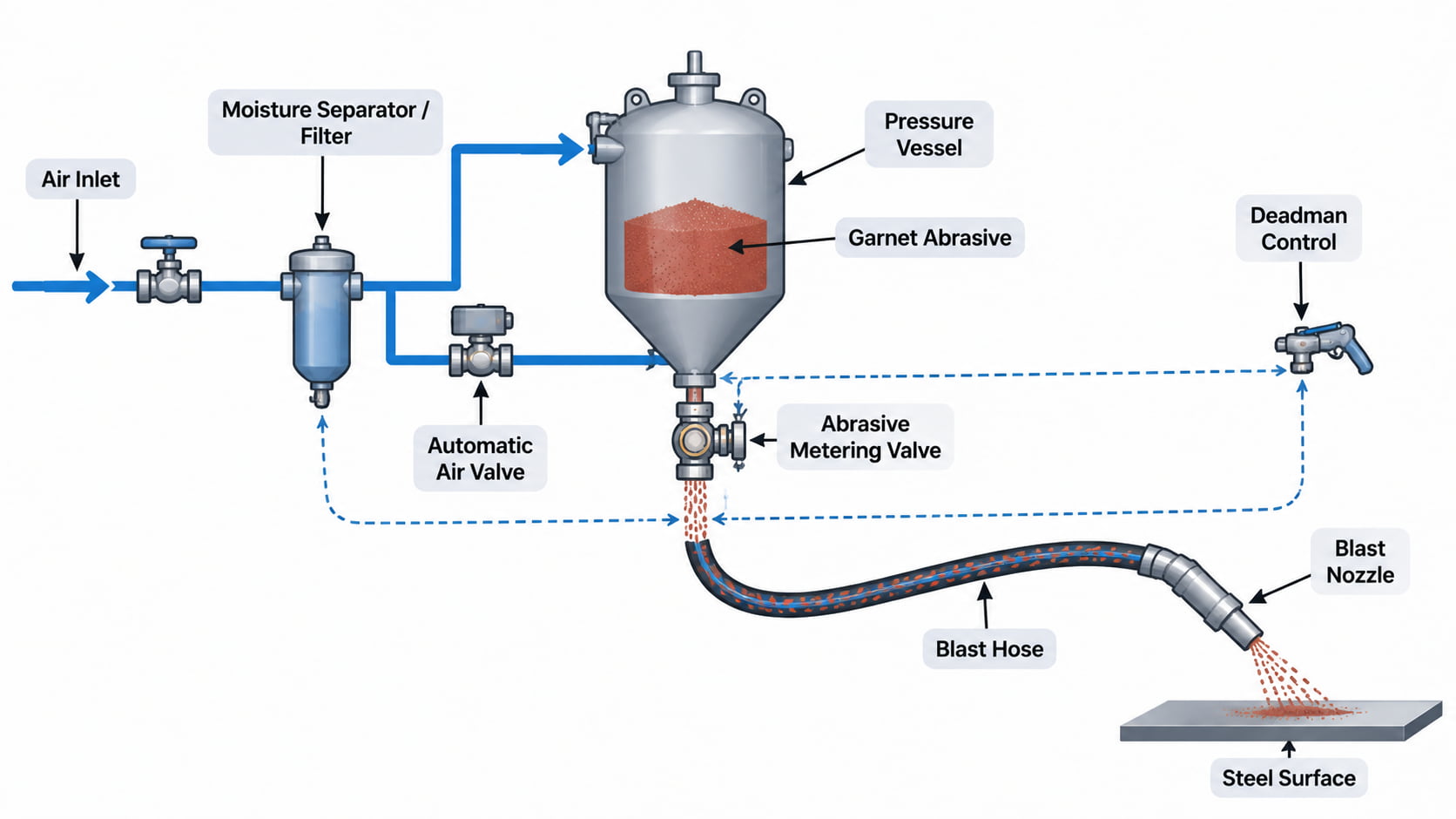
How exactly do moisture and oil in the compressed air affect the performance of garnet blasting?
As a compressor pressurizes air, its temperature typically rises. As it travels through aftercoolers, air receivers, and distribution piping, the air cools down, and some of the water vapor may condense into liquid water. If separators and drains do not effectively remove this condensate, it can enter the blasting system along with the compressed air. Moisture can dampen the abrasive and increase the risk of rust-back on freshly blasted steel.
First, when the abrasive becomes damp, moisture adheres to the surface of the particles. This can cause the abrasive to clump together in the blast pot or near the metering valve, leading to an inconsistent feed, intermittent flow at the nozzle, or, in severe cases, complete blockages.
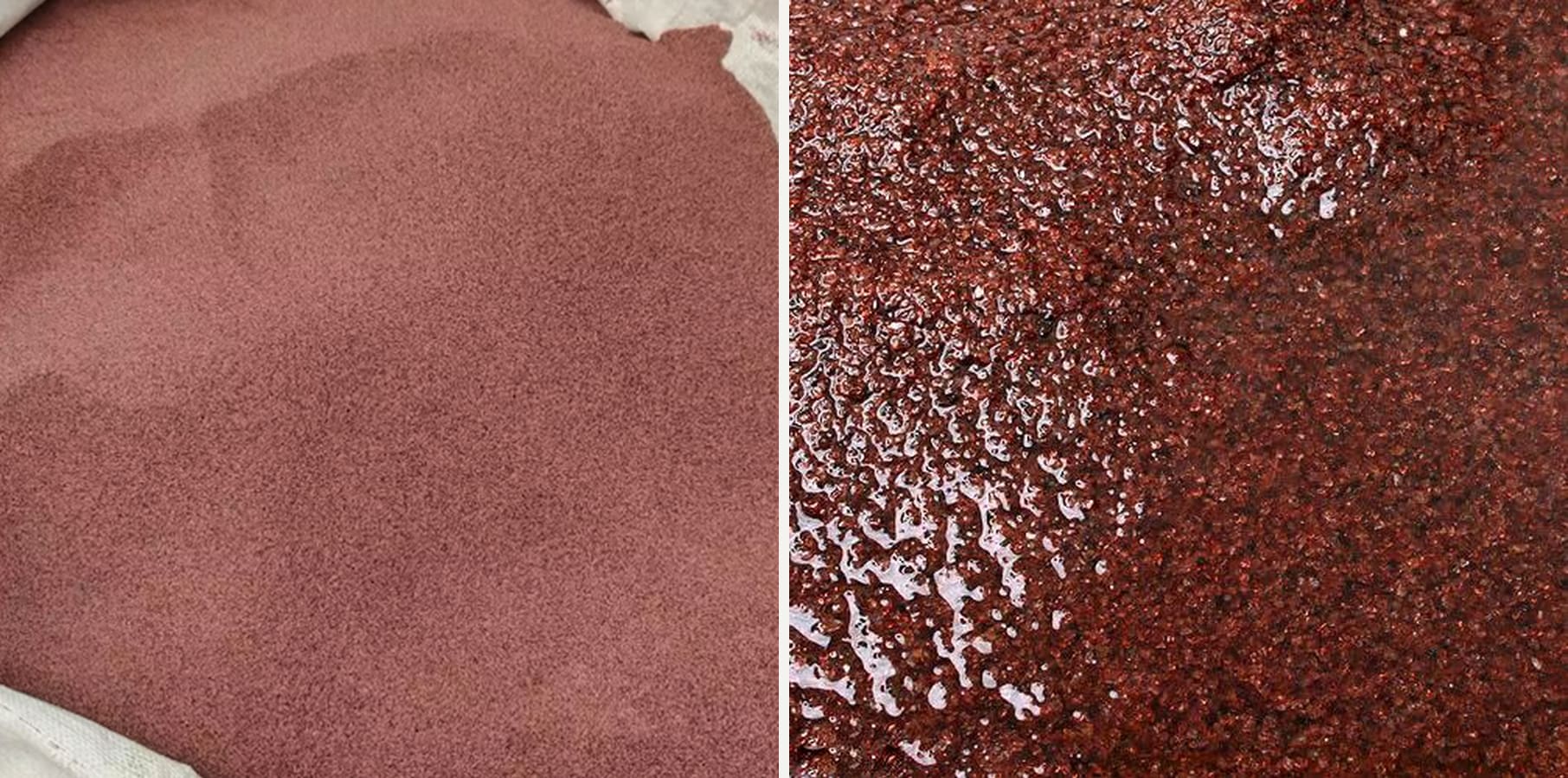
Second, rust can reappear shortly after blasting as a light yellow, orange, or brown discoloration on the steel surface. This affects the condition of the blasted surface and may also impair the quality of any subsequent coating. See the guidance on rust-back in the FHWA Field Manual for Bridge Painting Inspection.

If operators do not address this rust in accordance with project specifications, the residual oxides can create a weak interface between the steel and the coating, increasing the risk of poor coating adhesion and premature coating failure.
Small amounts of oily contaminants are not always visible to the naked eye, making the problems they cause harder to detect.
Air compressors that use lubricating oil can generate oil mist or oil vapor. If components such as oil-air separators and filters are not properly maintained, these oily contaminants can enter the compressed air piping and eventually reach the abrasive blasting equipment and the surface of the workpiece. This can contaminate the garnet abrasive and negatively affect both the cleanliness of the steel surface and the adhesion of subsequent coatings.
The latter is a particularly significant concern regarding oil contamination in compressed air. The airflow can deposit oily contaminants onto the steel surface after blasting, forming a thin, often invisible film. This oil film interferes with the coating’s wetting of the steel surface, making it harder for the paint to spread evenly.
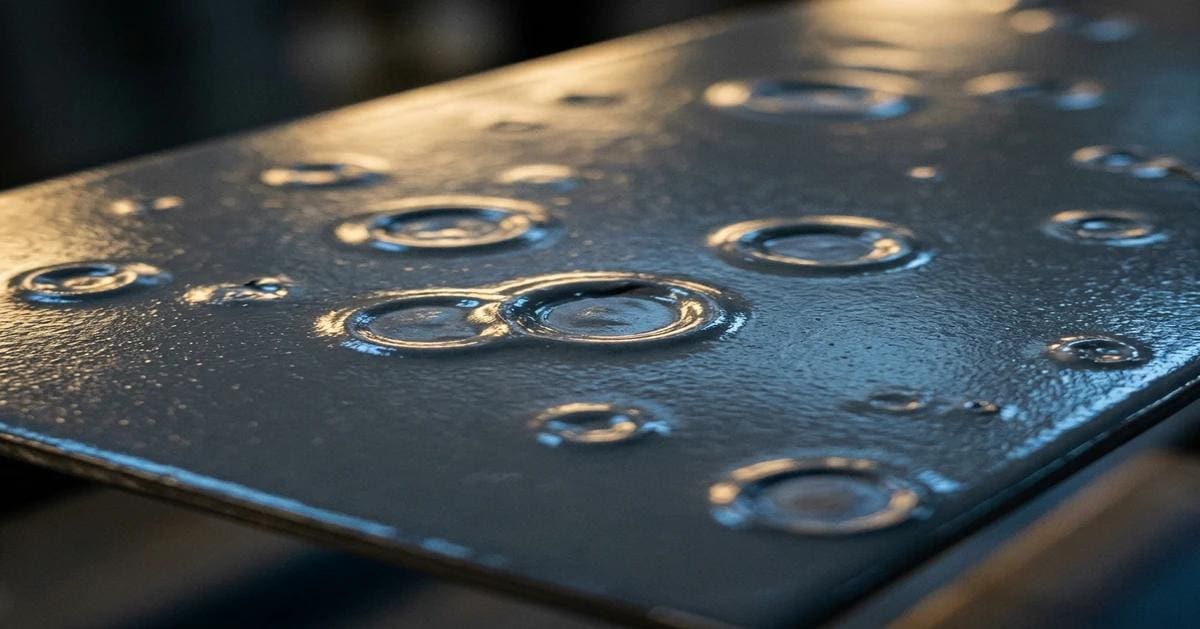
In industrial abrasive blasting, operators can refer to ASTM D4285 for a visual check for oil or water and use ISO 8573-1 to specify compressed air purity requirements.
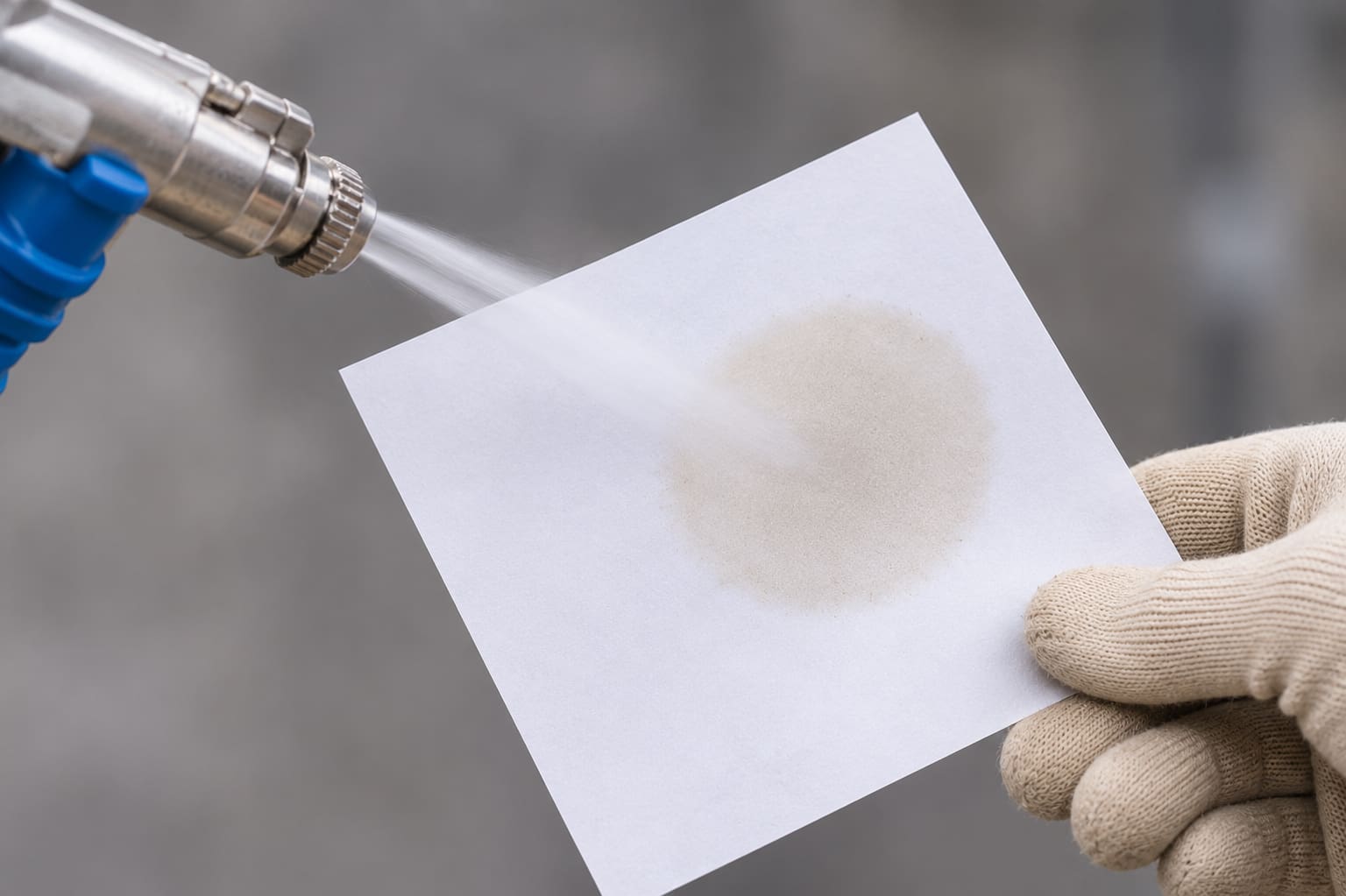
ASTM D4285 is commonly used in blasting and coating operations to check for visible oil or water in compressed air. This visual check is widely known as the blotter test. ASTM D4285-24
The basic procedure involves placing clean white blotting paper or an appropriate test medium in the airflow near the compressed air outlet, with the abrasive feed shut off, then checking the medium for visible traces of oil or moisture.
ISO 8573-1 defines compressed air purity classes for solid particles, water, and oil. Other parts of the ISO 8573 series provide measurement methods for individual contaminants. ISO 8573-1:2010
| Contaminant | Key parameters |
|---|---|
| Solid particles | Particle count by size range or mass concentration, depending on the class |
| Water | Pressure dew point or liquid water concentration, depending on the class |
| Total oil | Combined concentration of liquid oil, oil aerosols, and oil vapor |
Specifying a purity class for each contaminant defines the requirements for the compressed air supply.
Parameters such as particle size distribution, dust content, electrical conductivity, and free crystalline silica are key criteria for evaluating the quality of garnet abrasive. Clean, dry compressed air is also important for ensuring consistent abrasive delivery and achieving a surface suitable for subsequent coating.
