
Views: 0 Author: SGA Blasting Publish Time: 2026-10-08 Origin: SEPPE Garnet Team
In the anti-corrosion coating and abrasive blasting surface treatment industry, surface profile is one of the key factors affecting coating adhesion and long-term anti-corrosion performance. Blasting not only strips rust and old paint from metal surfaces, but also creates microscopic peaks and valleys in the metal surface through the impact of garnet abrasive.
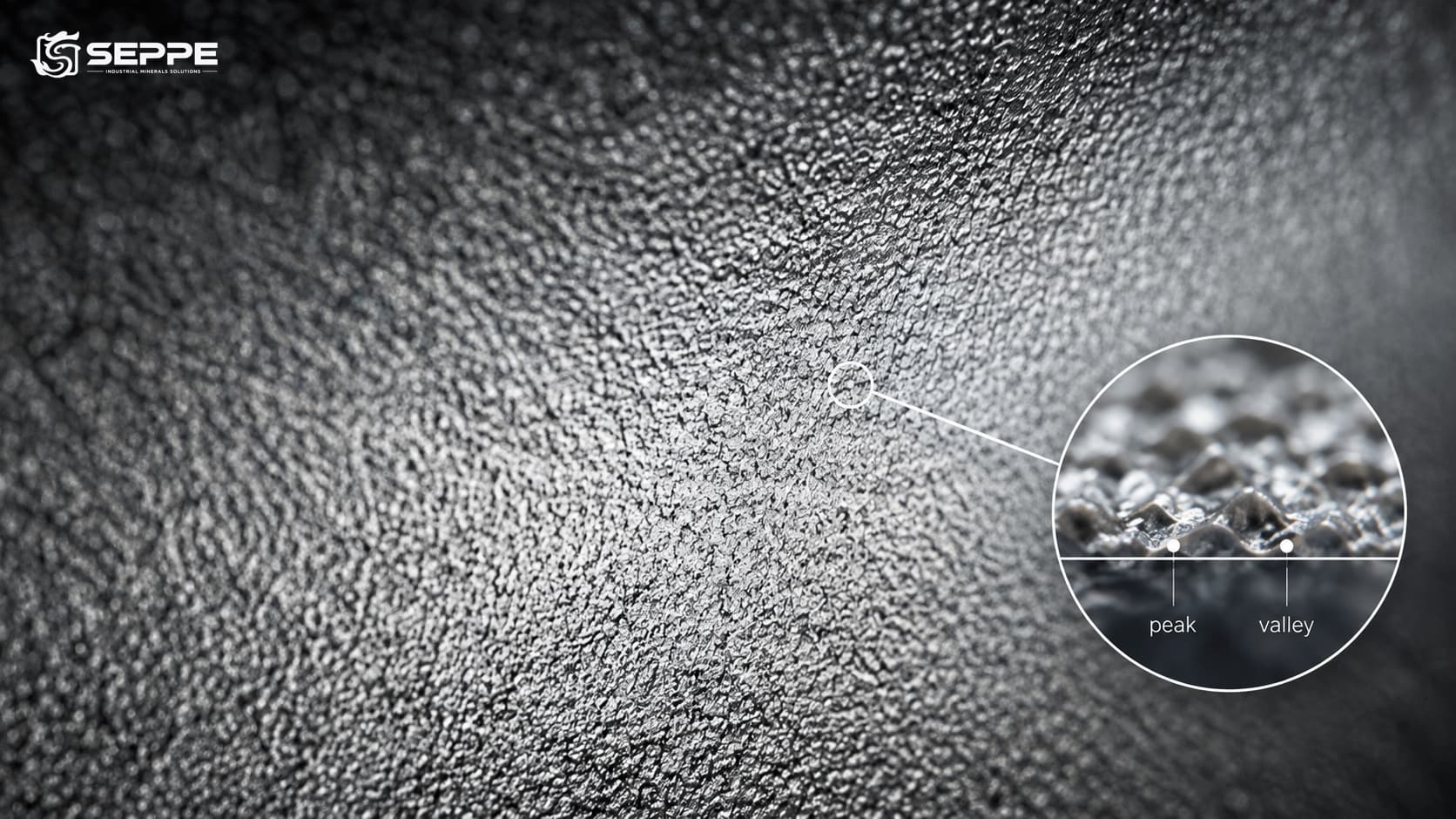
Original steel plate surface:
──────────────
Surface after garnet abrasive blasting:
__/\/\___/\/\/\__/\/\__
These uneven textures form the surface profile.
Garnet abrasive has high hardness. The SGA series in particular has a Mohs hardness of 7.5–8.0, hard enough to effectively impact and cut the substrate. Its natural particles have inherent angular edges; more pronounced edges generally provide a stronger cutting effect. Generally, the coarser the abrasive grit, the deeper the profile it can create. (Coarser garnet does not necessarily produce a better surface profile.)
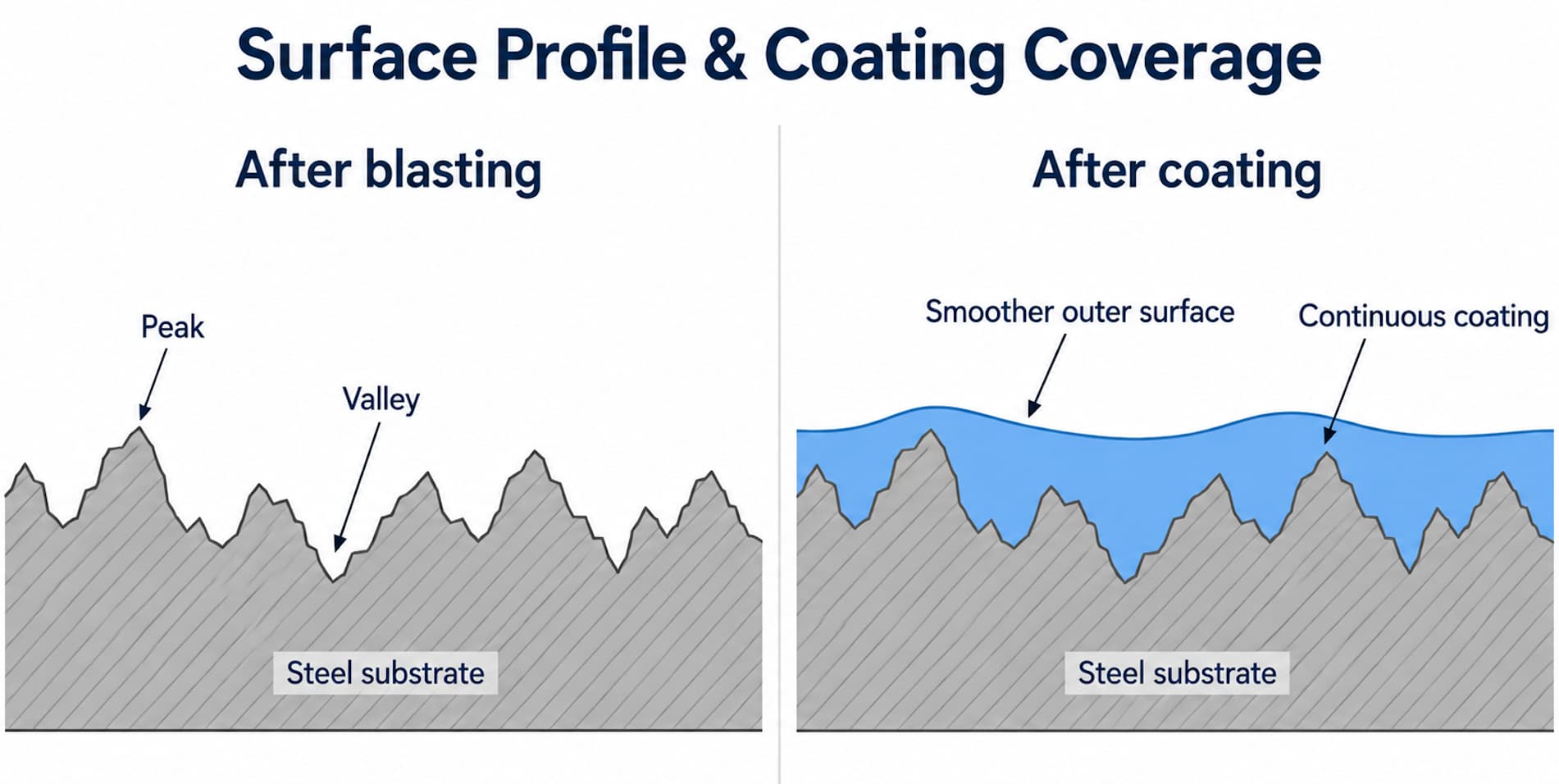
Therefore, garnet abrasive does not simply "clean the steel plate" — it also forms a suitable anchor pattern at the same time. When the uneven texture is coated with paint:
▓/▓/▓▓/▓/▓▓/▓
The coating can "grip" these microscopic irregularities.
Note: The coating must cover both the peaks and the valleys, with adequate film thickness over the peaks.
Many industrial coatings (such as epoxy resins, polyurethanes, zinc-rich primers, etc.) benefit from a suitable surface profile because it improves mechanical anchoring. This is one part of coating adhesion, alongside molecular interactions at the coating-substrate interface.
The mechanical anchoring works on a similar principle to mortise and tenon joints or glue seeping into wood pores: the paint film penetrates into the rough valleys and recesses, and forms a mechanical interlock after curing. Improperly controlled roughness can lead to failure of the coating project.
When roughness falls below design requirements, a low surface profile means an overly shallow anchor pattern or an overly smooth surface, with insufficient interface contact area and not enough microscopic recesses for the primer to "bite" into. When subjected to mechanical impact, thermal expansion and contraction, or external tension, the coating can peel off the metal surface in whole pieces like "peeling skin", losing its protective function.
Do not assume that higher roughness always equals better adhesion. The rough surface created by blasting has many microscopic "peaks" and "valleys". When liquid coating is applied, the film thickness at the tip of the "peaks" can be thinner than in the valleys. If the coating does not adequately cover these peaks, the metal peak tips may remain exposed or insufficiently protected, allowing localized rust spots to develop. Ensuring sufficient film thickness over the most prominent peak tips can require more paint, increasing coating consumption.
(Dry Film Thickness / DFT: The thickness of the paint film remaining on the substrate surface after the coating has dried or cured. Correspondingly, Wet Film Thickness / WFT is the thickness of the coating immediately after application, before drying or curing.)

Unfortunately, there is no single "fixed value" for surface profile that applies to all blasting and coating projects. The correct surface profile should be determined based on the substrate, coating system, design dry film thickness (DFT) and project specifications, to form a controllable surface profile that matches the subsequent coating system.
A profile depth of 1/3 to 1/2 of the total dry film thickness should not be treated as a universal rule. The required profile must follow the primer manufacturer's technical data sheet and the project specifications.
For example, for a coating with a design DFT of 40–60 μm, a profile range of approximately 20–30 μm may be selected if it is explicitly permitted by the coating manufacturer's data sheet and project specifications.
