Views: 210 Author: SEPPE Garnet Team Publish Time: 2026-07-21 Origin: SGA Blasting
Low dust is one reason garnet is considered for abrasive blasting, but the phrase is easy to misunderstand. The abrasive influences how much loose material enters the air and how readily the grains break down. It cannot control the dust released from rust, coating or the surface underneath.
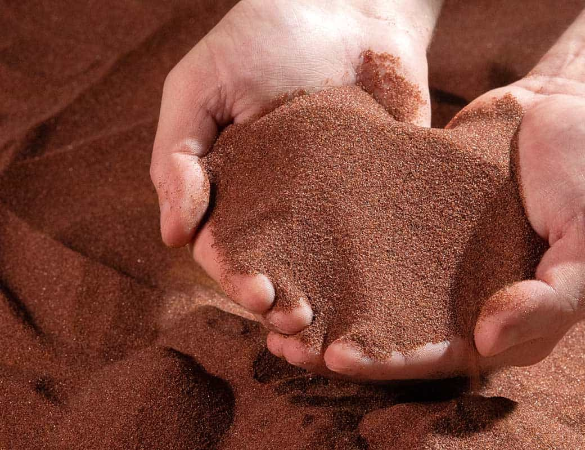
A washed and consistently screened garnet grade may reduce one avoidable source of dust. On site, that can mean a clearer view of the work and less fine material to collect. So the answer is yes: garnet can help reduce dust from the abrasive itself. It does not make the blasting process dust-free.

The cloud around a blast nozzle contains more than broken abrasive. Rust and mill scale separate from the steel, old paint is pulverized, and small amounts of the substrate may also be released. On a lightly rusted plate, the abrasive may account for a noticeable share of the dust. On a heavily coated structure, the removed coating can become the greater concern.
This difference matters when product documents are reviewed. An abrasive SDS describes the abrasive as supplied; it does not describe the material that will be stripped from the workpiece. The coating and substrate therefore need their own assessment before blasting begins.
| Dust factor | How it affects the job | What to verify |
|---|---|---|
| Loose fines in new abrasive | Enter the air before doing useful cutting work | Particle-size distribution and available fines data |
| Grain breakdown on impact | Creates additional fine particles during blasting | Pressure, grain condition and any recovery cycle |
| Rust, scale and substrate | Add dust whose composition is unrelated to the abrasive | Condition and identity of the material being blasted |
| Existing coating | May determine the most important airborne hazard | Coating records, survey or appropriate testing |
| Containment and ventilation | Change how dust spreads and how workers are exposed | Job controls and, where required, air monitoring |
Dust control begins during abrasive processing. Washing removes clay and unwanted residue, while screening narrows the particle distribution. With fewer loose fines in the blast pot, a larger share of the material leaving the nozzle is available for useful cutting.
Grain behaviour after impact is harder to predict from a specification sheet. A tough grain may resist fracture better than a more friable one, but blasting pressure, the target surface and reuse all influence the result. Hardness and density values alone cannot establish a dust-reduction percentage or a fixed number of useful cycles.
For that reason, a low-dust claim should be read together with current technical information. Particle-size distribution and fines data help describe the physical product. Statements about crystalline silica, heavy metals or other constituents should be supported by the current SDS, TDS or relevant batch documentation rather than by a general description of garnet.
Better visibility is useful. The operator can see the blast pattern, judge coverage and work with fewer interruptions. It is not, however, a measurement of respirable dust. The smallest airborne particles may be difficult to see even when the blast area looks noticeably clearer.
Abrasive selection therefore sits alongside enclosure, ventilation, dust collection and suitable personal protection. The exact controls depend on the coating, substrate, work location and people who may be exposed. Changing media can improve part of the process without replacing the site assessment.
A controlled trial is a practical way to compare two abrasives. Keep the surface, equipment and work method as consistent as possible, then look at visibility, grain breakdown, cleanup and the finished profile. When worker exposure is the question, appropriate air monitoring is more meaningful than appearance alone.
The useful question is not whether garnet produces zero dust. It is whether a documented, well-graded product removes one avoidable source of dust while still preparing the surface correctly—and whether the rest of the blasting system controls what the abrasive cannot.