
Views: 0 Author: SGA Blasting Publish Time: 2026-10-29 Origin: SEPPE Garnet Team
Silica content is a common specification for industrial minerals. In chemical analysis, silicon content is frequently reported as SiO2. However, in the field of occupational health, another term often appears: “crystalline silica.”
What is the difference between the SiO2 content reported in product specifications and the crystalline silica content referenced in occupational health guidelines? What is meant by “respirable crystalline silica”? And how do these terms relate to “free silica”?
To understand what SiO2 content signifies, it is essential to distinguish between “amount” and “structural form.”
On the product specification sheets for industrial minerals, SiO2 content typically refers to the amount reported in the form of silicon dioxide through chemical analysis, usually expressed as a percentage by mass (%).
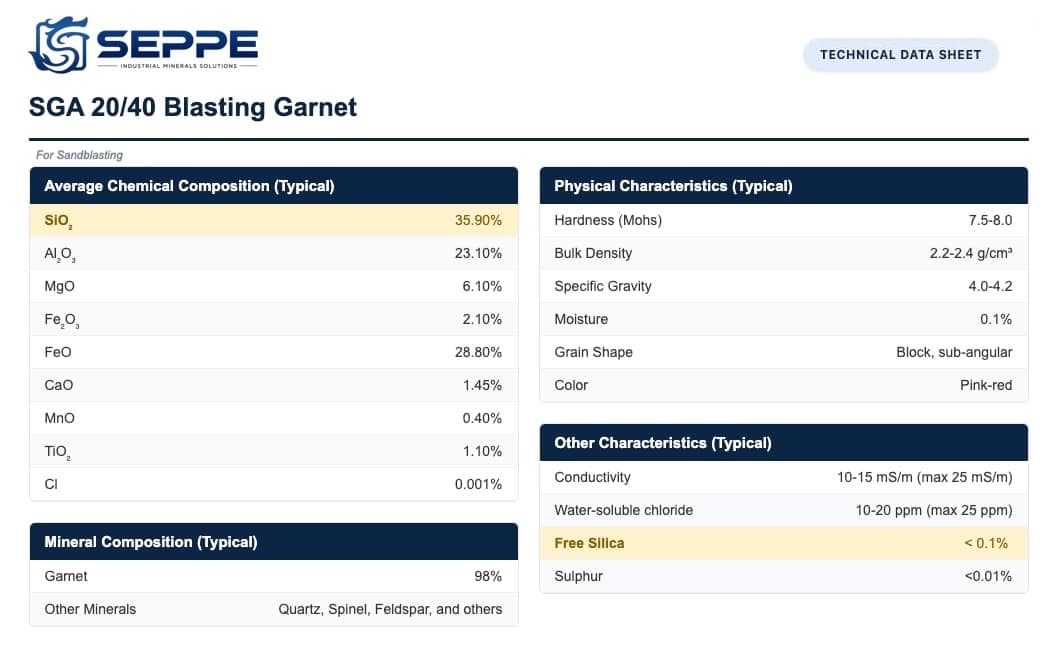
For example, an analysis report for SEPPE SGA Garnet might show an SiO2 content of approximately 35%, which indicates the amount reported as SiO2 in the chemical analysis. It does not mean that the product contains 35% free crystalline silica.
Once the total content is understood, we can examine the structural form of the SiO2.
In nature, silica generally exists in two distinct “forms” (structural configurations):
Crystalline silica: The atoms are arranged in a regular, repeating crystalline structure. Typical minerals include quartz, cristobalite, and tridymite.
Amorphous silica: The atoms lack the long-range, ordered arrangement found in crystalline structures. Examples include certain forms of silica gel and fused silica.
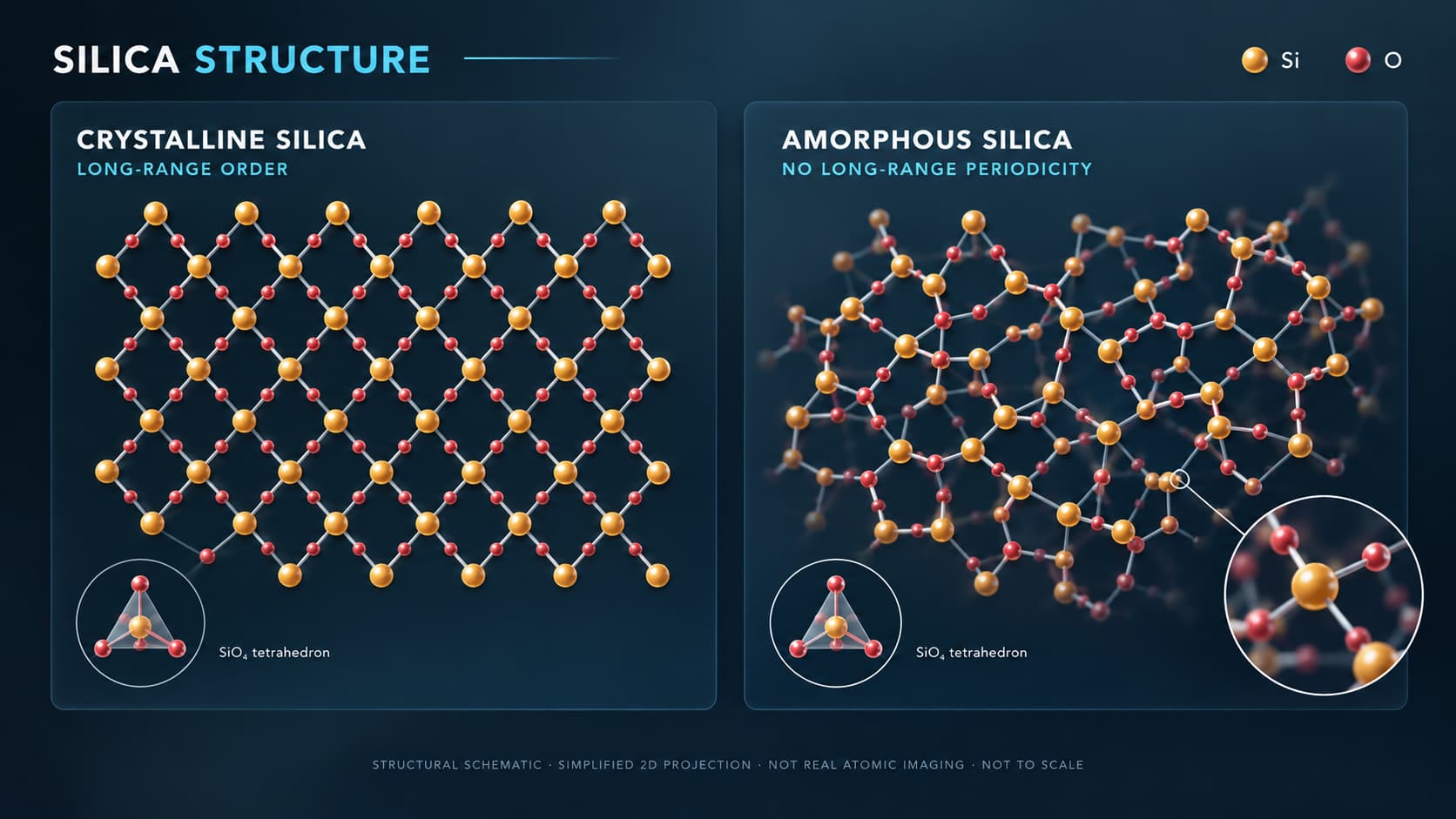
Silicon and oxygen frequently occur together with other elements—such as iron, aluminum, magnesium, or calcium—in mineral structures. For instance, garnet contains numerous silicon-oxygen tetrahedra, but these do not exist as independent SiO2; instead, they are part of what are known as silicate minerals. In this chemical arrangement, the silicon is not “free.”
This makes the term “free,” as in “free silica,” quite significant. In the contexts of industrial hygiene and mineralogy, free silica generally refers to silicon dioxide that has not combined with other elements to form silicate minerals. For instance, pure quartz sand—which has not chemically bonded with metals like iron or aluminum—is considered “free.”
Consequently, free crystalline silica refers to silica that is not in an amorphous state, like glass, and has not been incorporated into other mineral structures, such as those containing metallic elements like garnet. Therefore, the amount of free crystalline silica in a material cannot be determined based solely on the SiO2 content listed in a specification sheet.
Official guidance supporting Australia’s Model WHS Regulations, as well as ASTM E1132-21, highlights the health risks associated with exposure to respirable crystalline silica.
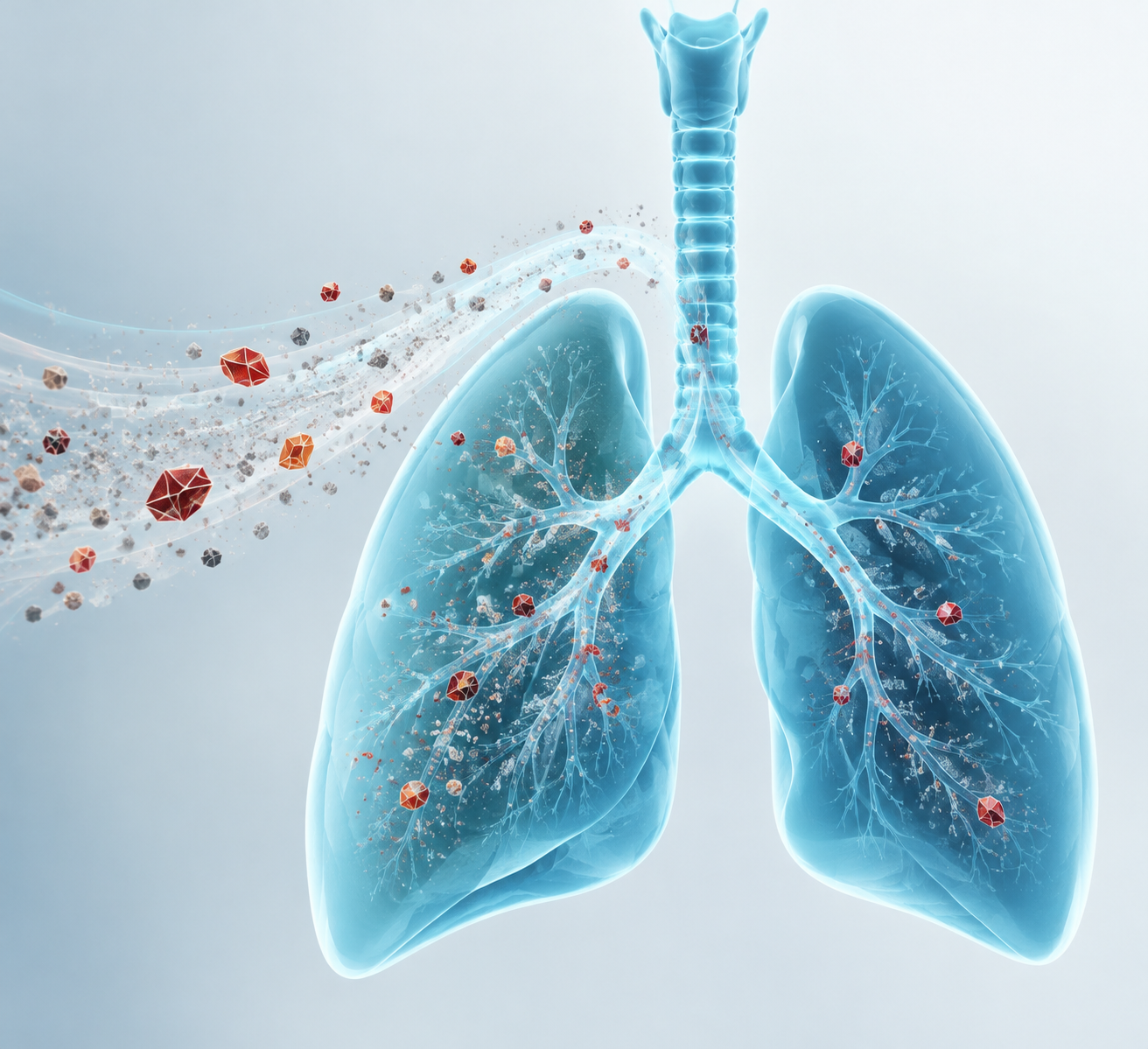
The primary concern is that long-term inhalation of significant quantities of free crystalline silica can cause silicosis—a severe, irreversible occupational lung disease.
Safe Work Australia’s Model Code of Practice for Abrasive Blasting identifies substances containing more than 1% free silica, meaning crystalline silicon dioxide, as restricted for abrasive blasting under the model WHS framework. In abrasive procurement, however, buyers more commonly require the free crystalline silica content to be below 0.1%.
ISO 11126-10:2025, which specifies requirements for almandite garnet abrasives supplied for blast-cleaning, also notes free silica as a material requiring appropriate safe-handling guidance.
In the field of sandblasting, the content of free crystalline silica—along with the level of respirable crystalline silica exposure generated during operations—is a critical metric. From a broad mineralogical perspective, free silica can encompass both crystalline and amorphous forms. However, because amorphous silica, such as certain types of fused silica or glassy materials, carries a significantly lower health risk than its crystalline counterpart, free crystalline silica is the value more commonly stated in technical documentation for sandblasting abrasives.
