
Views: 0 Author: SEPPE Garnet Team Publish Time: 2026-08-27 Origin: SGA SEPPE Garnet
In the garnet category, alluvial pink garnet is generally more expensive than red rock garnet. The core reasons for this price difference stem from three major natural and technological differences: the properties of the natural mineral, processing costs, and particle physical properties. Furthermore, considering the performance requirements of the two core application scenarios—waterjet cutting and sandblasting—the price difference is further widened. The specific core reasons and application values are as follows:
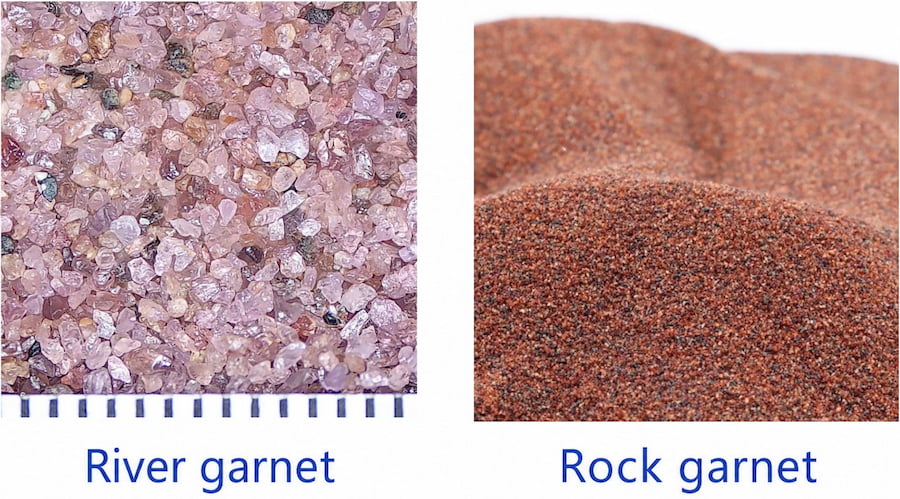
Pink garnet originates from freshwater riverbeds and, after millions of years of natural erosion, naturally has extremely low chloride and soluble salt content (Cl⁻ < 25 ppm). This low-chloride characteristic completely prevents flash rust after sandblasting, making it extremely suitable for shipbuilding, marine engineering, and high-standard anti-corrosion coatings.
Red Garnet: Primarily consists of hard rock ore or sea sand, containing numerous impurities. If derived from sea sand, desalination costs are extremely high. Incomplete salt washing can easily lead to coating blistering and corrosion after use.
Silt: Natural erosion has eliminated a large amount of silt and brittle particles, resulting in high purity.
Red Garnet: Rock ore requires artificial blasting and crushing, containing a large amount of parent rock impurities and dust. To achieve the cleanliness required for waterjet cutting and sandblasting, red sand must undergo multiple high-intensity magnetic separations and multiple water washes. Due to the numerous processing steps and high losses, the overall cost of achieving the same level of cleanliness is extremely high.
Alluvial silt, eroded by river water over long periods, often exhibits a sub-angular or rounded-edge shape. It has few internal microcracks and excellent toughness, allowing for continuous breaking and the creation of new edges during water cutting. It can also be recycled multiple times (3-5 times) during sandblasting.
Ordinary hard rock red garnet is mostly obtained through mechanical crushing. While it has many sharp angles, it also has many internal microcracks and is brittle, easily disintegrating and generating large amounts of dust during use.
Here is the specific differences between river, beach, and rock garnet:https://www.seppecn.com/river-beach-and-rock-garnet.html
We know that garnet has two main applications—water cutting and sandblasting. The core evaluation indicators for these two scenarios differ, further determining the price of different types and specifications of garnet.
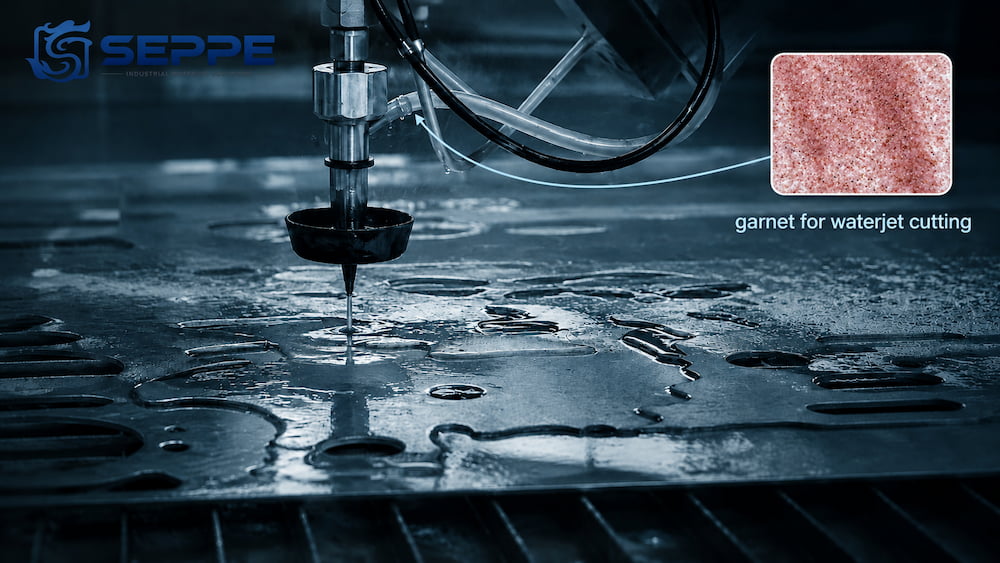
In the waterjet cutting field, the price difference of garnet mainly depends on the following three indicators:
High-quality garnet, such as SEPPE SGA 80/120, undergoes extremely precise screening, resulting in zero large particles and zero ultrafine dust.
Coarse screening results in oversized particles or excessively fine dust. Large particles directly clog the waterjet nozzle, causing downtime; excessively fine dust does not participate in cutting, only wasting water and electricity.
SEPPE SGA 80/120 is made of deep, unweathered iron-alkaline garnet (Mohs 7.5–8.0), with extremely high hardness.
High hardness results in strong cutting force, increasing cutting speed by 15%–30%, and significantly reducing labor and water/electricity costs.
3. Cleanliness/Number of Magnetic Separation and Washing Cycles: SEPPE SGA garnet undergoes multiple magnetic separations and repeated washing, resulting in excellent fluidity. It does not clog sand pipes, provides uniform sand supply, and produces smooth, flat cut surfaces (no trailing marks).
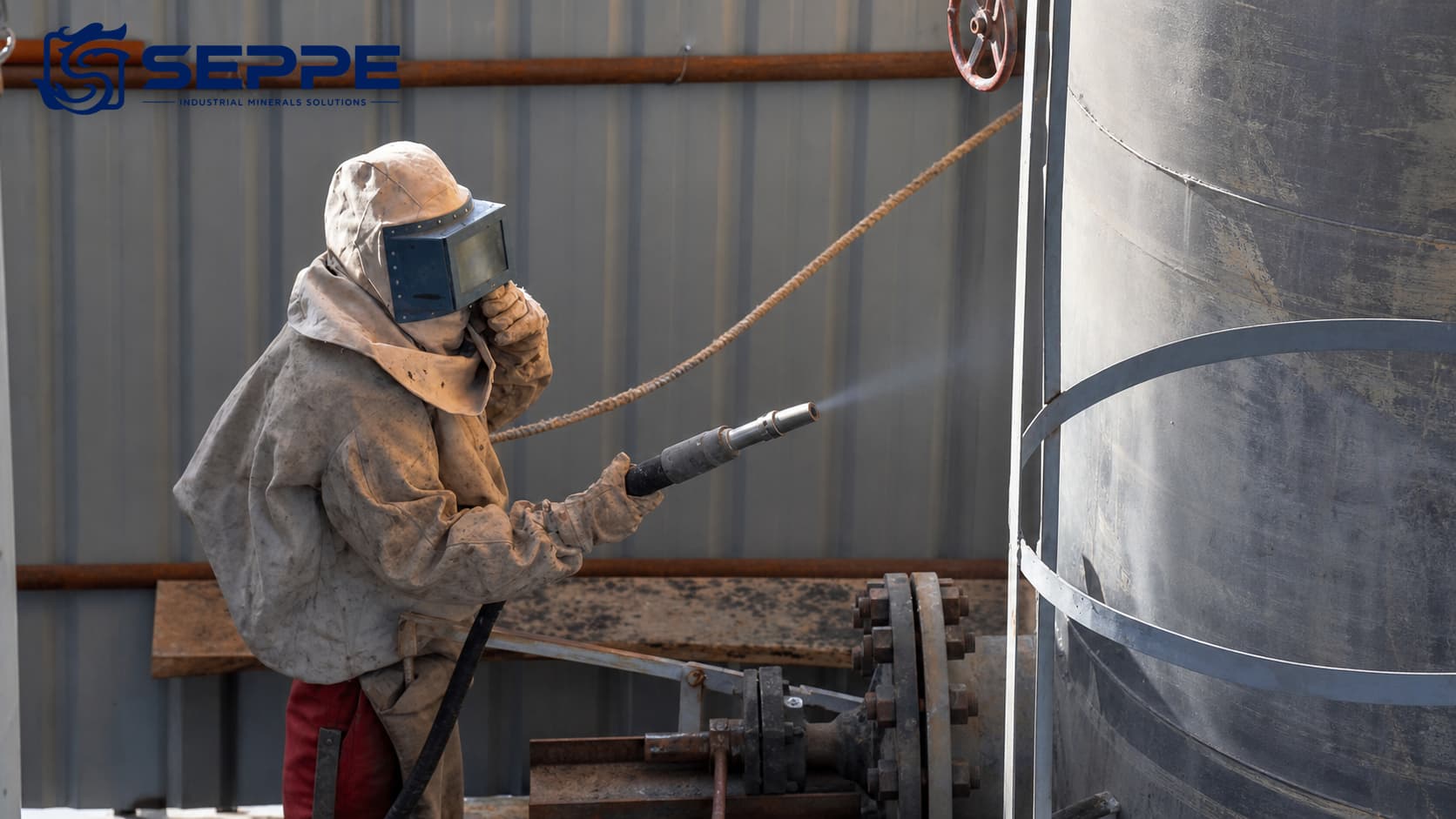
1. Chloride Ion and Conductivity (Most Critical Indicators): High-standard corrosion-resistant sandblasting (expensive): Chloride ions < 25 ppm (compliant with ISO 11126 and PSPC standards). Suitable for ship cabins, subsea oil and gas pipelines, and tank interiors, etc., with a significantly higher price than ordinary sand.
2. High-quality alluvial silt particles are highly resilient and not easily crushed after impact, allowing for recycling 3–5 times. Although the purchase price per ton is higher than ordinary waste sand, high-quality garnet is actually much cheaper "based on the cost per use."
Coarse garnet (e.g., 20/40 Mesh): Used for heavy rust removal and thick paint peeling; requires a larger initial crushing particle size; resources are scarce, and the price is relatively high.
Medium garnet (e.g., 30/60 Mesh): The most common and highest-volume specification; offers the best cost-performance ratio.
Fine garnet (e.g., 80 Mesh): Used for sandblasting aluminum alloys, stainless steel, or thin sheet metal surfaces for corrosion protection; requires high screening standards; unit cost is slightly higher.
With the comprehensive advantages of high purity, low chloride content, excellent toughness and high reusability, SEPPE natural alluvial garnet is the ideal choice for high-precision waterjet cutting and high-standard anti-corrosion blasting projects. For product inquiries and business cooperation, please contact SEPPE via Email: info@seppe.cn.
