Views: 0 Author: SEPPE Garnet Team Publish Time: 2026-10-23 Origin: SEPPE Tech
In our previous article China vs. India vs. Australia Industrial Garnet, we explored the geological origins, physical properties, and performance differences of garnet abrasives from different regions. Beyond understanding these material characteristics, we also need to know how to choose a truly reliable export supplier in practical procurement.
When sourcing garnet abrasives, you might be primarily focused on raw material costs. While this is certainly important, an experienced buyer will look beyond the price tag by examining the product specifications and data reports provided by the supplier. It is crucial to consider the "hidden costs" associated with low-quality garnet—such as issues with moisture content, dust levels, particle size distribution, or electrical conductivity. Substandard material can lead to frequent clogging of blasting equipment and reduced operational efficiency, ultimately resulting in higher labor costs for cleanup and the need for costly rework.
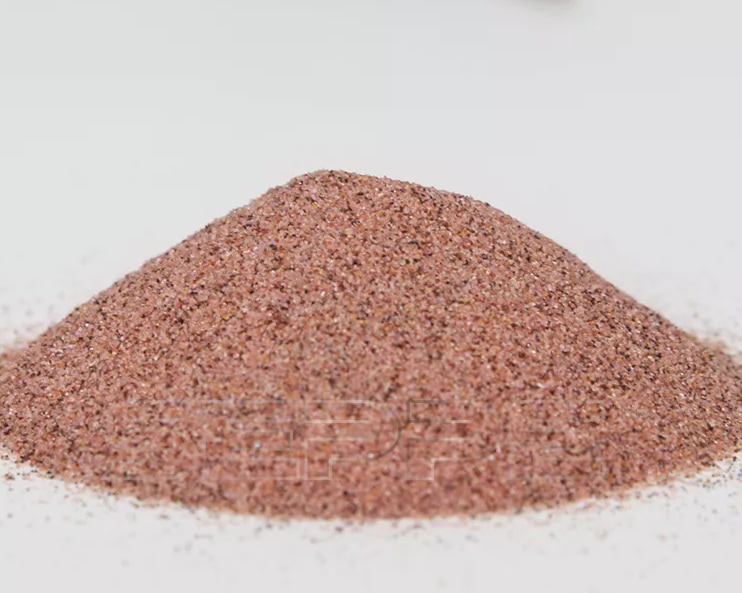
Product specifications are a vital starting point, but a spec sheet alone is not enough to guarantee that a supplier can consistently provide material that meets your requirements. When selecting a garnet abrasive supplier, pay close attention to the following:
Ensure the supplier can provide detailed technical specifications, including particle size distribution, moisture content, bulk density, electrical conductivity, and water-soluble chloride levels. You should also request a Technical Data Sheet (TDS), Material Safety Data Sheet (MSDS), and Certificate of Analysis (COA).
Before this, you should inform the supplier of your specific application so it can recommend the appropriate grade:
20/40: Heavy-duty blasting and removal of thick coatings.
30/60: General-purpose blasting and surface preparation.
80 mesh: Waterjet cutting.
Different applications require different grades of garnet.
The quality of garnet abrasives depends not only on the raw material source but also on the subsequent processing and grading stages. Ask how the supplier manages these production steps and how it uses laboratory testing to verify that the finished product meets the agreed-upon specifications.
Learn more about the raw material screening, magnetic separation, washing, drying, and particle sizing processes—as well as the associated data—for SEPPE SGA Garnet at the SEPPE Quality Control Hub.

A reliable supplier should be able to explain its finished-product sampling procedures, how it documents test results, and how it links Certificates of Analysis (COA) and batch numbers to the actual goods delivered.
Processes such as verifying packaging labels, cross-checking quantities, and conducting container-loading inspections help mitigate the risks of specification errors or delivery issues in international procurement.
Standard export packaging for SEPPE SGA Garnet includes 25 kg bags, 1000 kg jumbo bags, inner liners, and pallets. Prior to shipment, the supplier stores products in a dry warehouse to ensure that the packaging remains intact, clean, and free from water damage.
Given the significant volatility in international ocean freight costs and the ongoing challenges to supply chain stability, buyers of garnet abrasives should conduct a comprehensive evaluation. Key factors to consider include product quality consistency, operational efficiency (in sandblasting or waterjet cutting applications), and total landed cost.
With stable production capacity, traceable quality, and standardized shipping procedures, SEPPE SGA Garnet can help enhance operational efficiency—supporting a better balance between product performance, long-distance transportation costs, and overall procurement value.