
Views: 206 Author: SEPPE Garnet Team Publish Time: 2026-07-20 Origin: SGA Blasting
ISO 8501-1 provides written definitions and official reference images for assessing blast-cleaned steel. Inspectors compare the finished steel with both when determining its preparation grade.
Sa 0 is not an ISO 8501-1 blast-cleaning grade. Steel that has not been prepared should instead be described by its initial surface and rust condition.
| Grade | Cleaning level | Practical description |
|---|---|---|
| Sa 1 | Light blast cleaning | Loose or poorly adhering mill scale, rust and coating are removed. Firmly adhering material can remain. |
| Sa 2 | Thorough blast cleaning | Most mill scale, rust and coating are removed. Any remaining material is firmly adhering. |
| Sa 2½ | Very thorough blast cleaning | Mill scale, rust and coating are removed. Only slight traces may remain as limited stains or streaks. |
| Sa 3 | Visually clean steel | Visible mill scale, rust, coating and foreign matter are removed, leaving a uniform metallic appearance. |
Sa 2½ is commonly associated with a near-white appearance. Sa 3 represents visually clean steel and should not be described as allowing a small amount of foreign matter to remain.
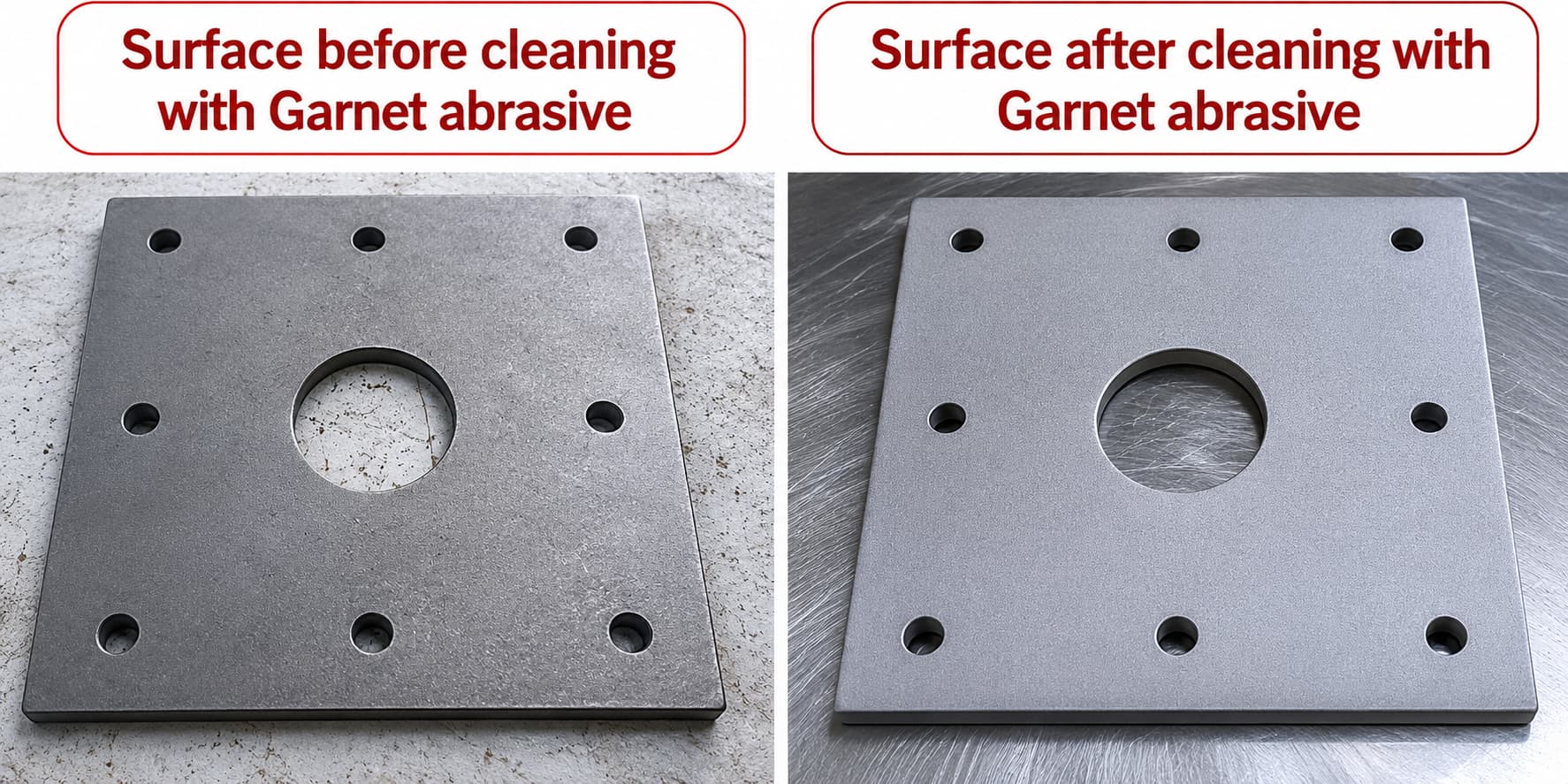
Yes. Properly processed garnet is a hard, dense mineral abrasive that can remove rust, mill scale and aged coatings from steel. SGA 20/40 and SGA 30/60 are practical starting grades for many industrial blasting projects.
However, the preparation grade cannot be guaranteed from the abrasive name or mesh size alone. The same garnet can produce different results when the air supply, nozzle condition, abrasive flow, stand-off distance, angle or operator technique changes.
Sa 3 is not automatically the best choice. It normally requires more time and abrasive than Sa 2½. The correct target is the grade specified for the coating system and service environment.
Initial steel condition: Thick coatings, heavy mill scale and deep corrosion require more work than light atmospheric rust.
Garnet mesh size: SGA 20/40 is more aggressive, while SGA 30/60 provides a practical balance between cleaning rate and profile control.
Air supply and nozzle: Adequate air volume, stable working pressure and a nozzle in good condition are necessary for consistent cleaning.
Blasting technique: Nozzle angle, distance, travel speed and the number of passes affect how completely contamination is removed.
Conditions after blasting: Dust, moisture, handling contamination or a long delay before coating can make an accepted surface unsuitable.
Sa grades assess visible cleanliness. Surface profile measures the peak-to-valley texture created by blasting. A surface can meet Sa 2½ but still have a profile that is too shallow or too deep for the selected coating.
Profile should therefore be measured separately using the method required by the project, such as ASTM D4417 or the ISO 8503 series. Dust and soluble salts are also separate inspection items when specified. They are not determined by the Sa grade.
Confirm the required Sa grade and surface-profile range before blasting.
Remove oil, grease and other contamination that should not be spread across the steel.
Prepare a representative trial area using the intended garnet and equipment settings.
Inspect the dry steel under suitable lighting and compare it with the applicable ISO 8501-1 description and reference image.
Measure the surface profile and perform any additional dust or salt tests required by the specification.
Protect the accepted surface from moisture and contamination until the coating is applied.
Tell us the initial steel condition, coating to be removed, required Sa grade, target surface profile and blasting equipment. The SEPPE Garnet Team can recommend a practical starting mesh for trial blasting.
View SEPPE sandblasting garnet grades or contact info@seppe.cn.
