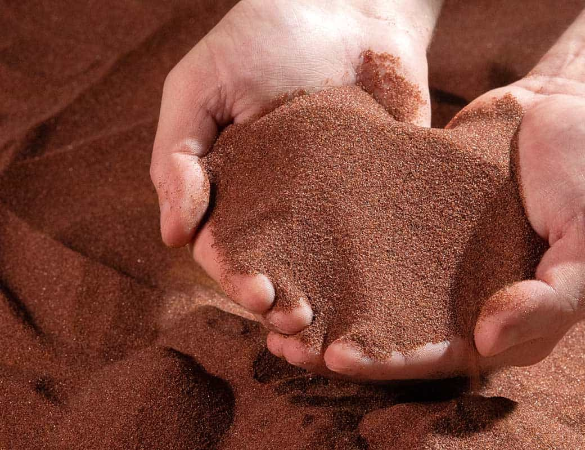
Views: 91 Author: SEPPE Garnet Team Publish Time: 2026-07-21 Origin: SGA Blasting
Stainless steel is not difficult to blast, but it is easy to treat it like carbon steel. That is where many avoidable problems begin. A surface may look clean immediately after blasting and still carry ferrous particles from steel shot, iron grit, recycled abrasive or equipment previously used on carbon steel. Those particles can later produce rust staining on a material selected for its corrosion resistance.
Before choosing an abrasive, decide what the finished part must do. Removing scale from a heavy fabrication, preparing a surface for coating, reducing glare and producing a decorative satin finish are different jobs. Garnet is a useful option for several of them, but it should be selected around the required result rather than used as a universal answer.
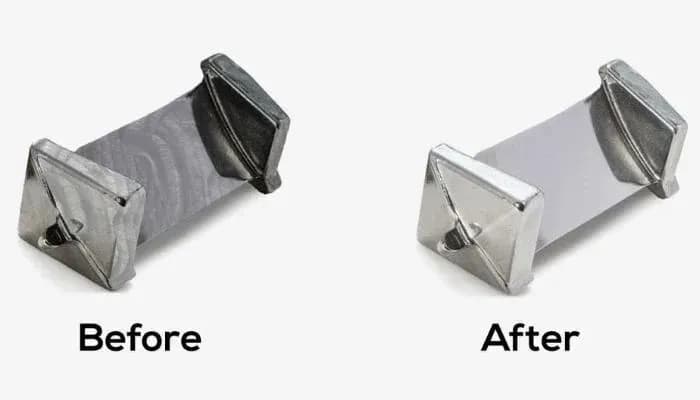
A visual comparison of two surface conditions. Appearance alone does not confirm the abrasive used, the achieved profile or final acceptance.
Carbon steel shot or iron grit can leave metallic particles embedded in stainless steel. A non-metallic abrasive such as garnet avoids that direct source of steel-shot contamination. Its angular grains cut the surface instead of peening it, which can make garnet suitable for removing adherent deposits and producing an anchor profile before coating.
That does not mean every bag of garnet or every blasting system is automatically suitable. Almandine garnet naturally contains iron as part of its mineral structure; this is different from loose metallic iron on the surface. If a project limits free iron, soluble salts or other contaminants, the current batch documentation and the project acceptance criteria should be checked before blasting begins.
The equipment matters just as much as the new abrasive. A cabinet, hose, pot or reclaim system that has processed carbon steel can carry contamination into the next job. For sensitive stainless steel work, use dedicated equipment where possible or clean and inspect the complete blasting path before production.
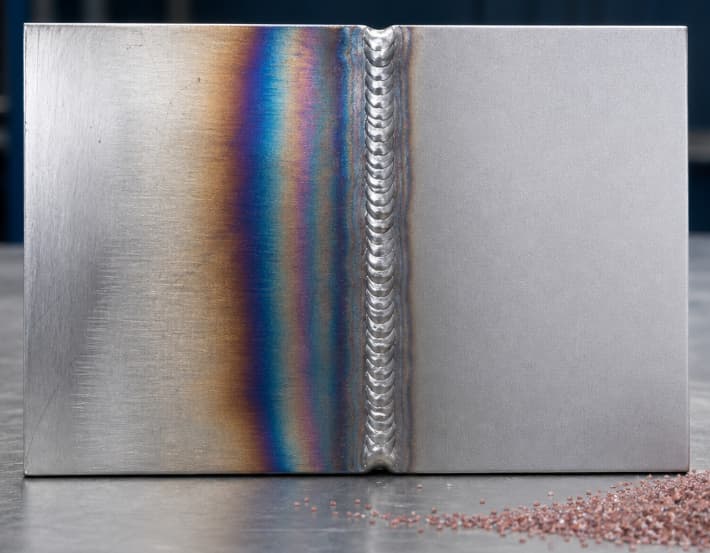
Illustrative comparison of weld heat tint and a more uniform prepared surface. The required finish and surface profile must be verified separately.
For coating preparation, garnet can provide the cutting action needed to remove contamination and create a profile for adhesion. The required profile should come from the coating specification. A surface that looks evenly matte may still be too coarse, too smooth or insufficiently clean for the selected coating system.
Decorative stainless steel is a different case. If the objective is a soft satin appearance rather than an anchor profile, a less aggressive medium such as clean glass bead may be more appropriate. Thin sheet and precision parts also need lower pressure, controlled nozzle distance and careful dwell time because excessive blasting can change dimensions or distort the component.
Weld heat tint deserves particular attention. Blasting can change its appearance and remove surface deposits, but it does not automatically replace every cleaning, pickling or passivation step. The correct post-treatment depends on the stainless steel grade, the service environment and the fabrication specification.
SGA 20/40 is the coarser option and gives a more aggressive cutting action. SGA 30/60 is often a more practical starting point when the job needs a balance between cleaning rate and profile control. Finer garnet may be considered for lighter cleaning or a less aggressive finish. These are starting points, not fixed prescriptions: pressure, nozzle size, angle, stand-off distance and the condition of the part all change the result.
A trial blast on representative material is therefore part of good process selection, not an optional extra. Examine the cleaned surface for the required appearance and profile, check for distortion or embedded residue, and confirm that the result meets the coating or fabrication specification before scaling up.
Garnet should also not be described as dust-free. Blasting breaks down abrasive and can release material from the coating and substrate. Enclosure, ventilation, dust collection and suitable personal protective equipment remain necessary under the applicable workplace requirements.
For a starting recommendation, send us the stainless steel grade, part thickness, current surface condition, required finish or profile, blasting equipment and project quantity. The SEPPE Garnet Team can help compare a suitable SGA grade for trial blasting. You can also contact info@seppe.cn.