
Views: 202 Author: SEPPE Garnet Team Publish Time: 2026-07-21 Origin: SGA Blasting
Choosing a blasting abrasive is not only about hardness. On a real job, the abrasive must remove rust or old paint at a useful rate, flow steadily through the equipment and leave the right surface for the coating that follows.
Garnet is widely used because it handles these jobs well. Its grains are hard and angular, yet tough enough to keep cutting as they strike the surface. It is also non-metallic, which is useful when particles from steel shot or grit would be a concern.
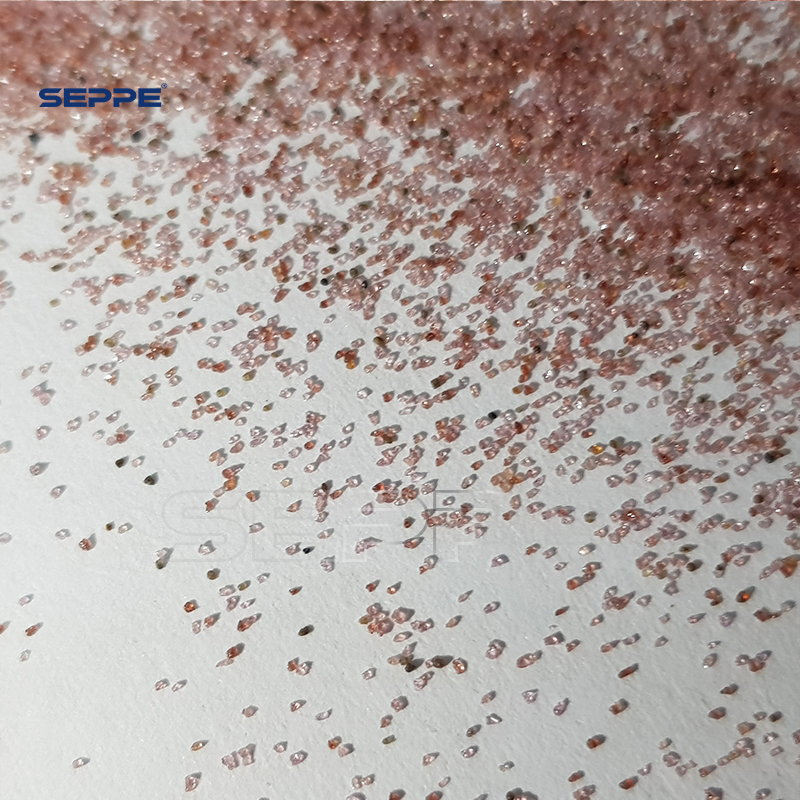
SGA alluvial garnet abrasive for industrial sandblasting and surface preparation.
As the grains hit the workpiece, their edges bite into corrosion and worn coating instead of simply peening the steel. This cutting action clears the surface and creates a profile for the new coating to grip. The aim is not to make the steel as rough as possible; it is to produce the profile required by the coating system.
Particle sizing changes the way that cutting action feels. Too many fine grains add dust and do little useful work. Oversized grains cut more heavily and may leave a deeper profile than the job needs. A well-screened grade feeds more evenly, so the operator has a better chance of getting the same result across the whole surface.
The non-metallic nature of garnet is another practical advantage, particularly where ferrous contamination matters. It does not, however, make an unclean blasting system safe to use on a sensitive surface. Hoses, pots and recovery equipment should be checked if they have previously handled another abrasive.
For heavy rust, thicker coating or sturdy steelwork, SGA 20/40 is often the place to begin. Its coarser grains strike with a stronger cutting action, making it useful when the main task is removing stubborn material.
Move to SGA 30/60 when the work calls for more control. The finer grade suits general cleaning and coating preparation, especially when an unnecessarily deep profile would create another problem. It is not a weaker version of 20/40; it is intended for a different balance between removal and finish.
These are useful starting points rather than fixed rules. The same abrasive behaves differently through a worn nozzle, under greater pressure or in the hands of an operator moving more slowly across the surface. Instead of trying to settle every variable on paper, blast a small trial area and measure the profile it leaves.
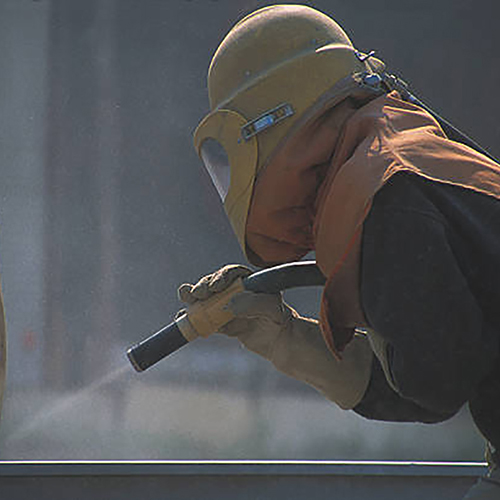
A trial blast shows how the selected grade behaves on the actual surface.
That trial is usually more useful than choosing by mesh size alone. It shows whether the coating is coming away cleanly, whether the profile is within range and whether the finish is consistent. If the surface is still not right, the grade and blasting setup can be adjusted before the full job begins.
This is the practical reason garnet works well as blast media: it gives contractors a useful choice between aggressive removal and controlled surface preparation. The final decision still belongs to the surface in front of the nozzle and the coating specification that follows.
Comparing SGA 20/40 and SGA 30/60 for a project? A photo of the existing surface and the required coating profile will help us suggest a grade for the first trial. See our garnet abrasive for sandblasting or contact info@seppe.cn.
